δυνατὰ δὲ οἱ προύχοντες πράσσουσι
καὶ οἱ ἀσθενεῖς ξυγχωροῦσιν
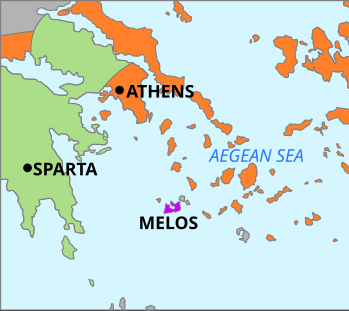
When the Peloponnesian War broke out in Greece 2,500 years ago between Athens and Sparta, the Athenians told the islanders living on Melos ‘you are either with us or against us’. Athens had created democracy, had all the famous philosophers, dramatists, politicians and control of the propaganda (Greek history was written by Athenians). Athenian women were, of course, the property of their husbands.
The Melians said they preferred to stay neutral. Athens invaded, killed the men, and brought the enslaved women back to Athens.
Thucydides writing the history of the War famously framed the issues in words heard a lot in translation these days from or about the US, Russia, China or the ex-colonial powers.
The strong do what they can. The weak suffer what they must
Enthusiasm
Enthusiasm has long been a characteristic of Americans. The American launch of SSRI drugs took place when American psychiatry was deserting a prior enthusiasm for Freudian psychotherapy in favor of psychotropic drugs, demonstrating an enthusiast’s willingness to push the envelope and extend the use of these drugs to children. See ADHD, ASD and Disability Benefits Collide.
US child psychiatrists then had no experience of antidepressants. In 1994, Neal Ryan, a child psychiatrist, drew up a protocol for an SSRI trial and approached an adult psychiatrist Martin Keller for ideas about how to run one. Keller and Ryan approached SmithKline Beecham (SB) for support to run what came to be called Study 329 – a trial giving paroxetine to minors.
In November 1997, before the study had finished, SB analyzed Study 329’s acute phase data and figured they had a good result. Item 2 on the Hamilton Depression Scale appeared to show paroxetine was better than placebo. SB convened a meeting with Keller, Ryan and others and told them the good news. Keller presented these data at an APA meeting in Toronto in May 1998.
GSK headline this 1997 result to this day – see below.
In October 1998, another branch of the company decided it would not be possible to show the results for Study 329 and Study 377 to FDA and claim paroxetine worked for minors. But it would also not be possible to tell the wider world paroxetine didn’t work. The good bits of the Study 329 data, therefore, would have to be picked out, as in Item2 on the HamD, and presented at a meeting in Paris the following month. The Paris and Toronto presentations were very similar.
A paper would also be written. This paper with Keller and Ryan as first named authors, but in fact famously authored by Sally Laden, who was not listed among the 22 authors, was sent to JAMA where the claim it showed paroxetine worked was rejected.
It was then sent to the Journal of the American Association of Child and Adolescent Psychiatry (JAACAP). AACAP claim their journal is the leading journal in the field. The paper was accepted by JAACAP’s editor, Mina Dulcan, despite quibbles from referees. Published in July 2001, its message that paroxetine was safe and effective for children significantly increased paroxetine sales.
The paper’s conclusions on efficacy were immediately challenged by Jon Jureidini and colleagues and its ambiguous safety data were questioned by others. JAACAP published a bizarre response to Jureidini, apparently written by Keller and Ryan, but possibly ghostwritten, accusing his Emperor of having no clothes. Dulcan also accused him of a conflict of interest for being part of a group called Healthy Skepticism – which he had openly declared.
On a parallel track, the US Government in 1997 introduced an incentive for companies to do safety studies of their medicines in children. If the studies were done, companies stood to gain 6 months patent extension – then worth up to $1 Billion for the leading SSRIs.
Study 329 had begun before that, as had an Eli Lilly study of Prozac for children. The Prozac study reported in 1997 and claimed Prozac worked. This was interesting as there had been 15 prior trials of antidepressants in children – all negative including a prior negative study of Prozac. Lilly ran a second study, which also claimed Prozac worked. In 2001, Lilly applied to FDA for both patent extension and approval to claim Prozac worked for depressed adolescents. FDA viewed the second study as negative. There are in fact more negative trials for Prozac than for any other antidepressant. See Science Kansas and Pancakes, and Kansas and the Wizard of Washington.
In 2002, SB now GlaxoSmithKline (GSK) lodged the results of 3 trials with FDA – Studies 329, 377, and 701. GSK told FDA all 3 trials were negative. FDA agreed. GSK asked FDA not to mention the studies were negative in the paroxetine label. FDA again agreed.
As this was happening, Panorama, the BBC’s leading investigative journalism program, opted to make a feature centered on paroxetine, GSK’s billion dollar best-selling antidepressant, that had helped make GSK the biggest pharmaceutical company in the world. The Secrets of Seroxat (paroxetine) broadcast in October 2002.
In 2001, just before Study 329 was published, GSK were found guilty of failing to warn about paroxetine’s hazards in a Tobin v SmithKline lawsuit, when 48 hours after starting paroxetine Donald Schell had shot his wife, daughter, grand-daughter and himself. This brought suicide and homicide into the frame. It was also clear that people were getting hooked to paroxetine. There was an enormous public response to the Panorama program, with 67,000 phone calls and 1,400 people using email, then a new form of communication, to report their suicidality on treatment and difficulties stopping. These reports led to a second program – Emails from the Edge – the first time Panorama had ever repeated a program.
Skip Murgatroyd, a lawyer with Baum Hedlund, was at this point involved in paroxetine lawsuits, some of which involved suicides in minors and another dependence on paroxetine. These legal actions led to a trip to GSK’s archives in Philadelphia and evidence that far from Study 329 being a wonderful success, both it and Study 377, which almost no-one knew about, and 701, which even fewer knew about, were negative. There was correspondence between GSK and both FDA in the US and MHRA in Britain, which post-Panorama showed real concerns about suicidality.
Meanwhile, New York State had an interest in paroxetine, primarily because Rose Firestein a lawyer in the Attorney General’s Office was concerned about the growing use of psychotropic drugs in children. She contacted Baum Hedlund and was told she should ask for Company Study Reports for 329, 377 and 701 and see what she made of them.
Back in the BBC, Andy Bell, working on the Panorama programs, was sent a number of GSK documents – one of which was the 1998 document, noted above, saying that neither 329 nor 377 showed paroxetine working for minors, but for commercial reasons it had to be portrayed as working which could be done by publishing the good bits of Study 329. This document was made public at an FDA hearing on SSRI linked suicidality in minors in February 2004.
Retraction
The demonstration of intent in this SB document caused a Black Box Warning crisis. When the document made it’s way to Rose Firestein, it underpinned a Fraud Charge against GSK.
Given the documentary evidence for fraud, FDA documents showing GSK told them Study 329 was negative and FDA agreement with this assessment, a suicidality crisis and resulting Black Box Warning, you might imagine the Keller et al Study 329 would have been retracted. It wasn’t. Mina Dulcan, the JAACAP editor, declared that in her opinion this was all good news. (Because it increased sales of a JAACAP article?).
After 2004, Jon Jureidini and Leemon McHenry set out to raise the retraction issue. They tried to get even one of Study 329’s 22 ‘authors’ to call for its retraction but none did so. They approached the institutions these ‘authors’ belonged to, including Brown University which employed Keller. Brown parted company with Keller but didn’t call for the Study to be retracted. Above all they approached successive JAACAP editors and got AACAP members to push for a retraction but to no avail. In 2008, the BMJ, in part because of Richard Smith, backed out of publishing an article by Jureidini and McHenry laying out what had by then become a retraction saga.
In 2012, the saga became an epic when a Department of Justice lawsuit against GSK was resolved with a payment of $3 Billion – then the biggest fine in corporate history. But even this didn’t lead to a retraction. AllTrials, of which BMJ was a part, praised GSK – See Follow the Rhetoric.
In 2014, following the creation of Restoring Invisible and Abandoned Trials (RIAT), Study 329 became a candidate for Restoration. Almost two years later, following intense rearguard blocking actions by a BMJ editor whose husband worked for a law firm who defended GSK in the Department of Justice action against them, a Restored Study 329 was published – Study329.org. The Restoration showed conclusively that paroxetine didn’t work and that it caused more suicidality and behavioral problems than either FDA or GSK had noted. It also catalogued a range of coding and grouping tricks that GSK had used to hide the harms.
Study 329 ended up as the first study published in the peer reviewed literature that had two publications reporting close to exactly the opposite findings to each other. The original Keller 2001 paper was still being cited – probably more than the Restored version – and bought, making money for AACAP and Elsevier.
All this provided further material for McHenry and Jureidini to push for a retraction.
Shameless
There wasn’t, however, much shock at this highly abnormal state of affairs. The editor of the New England Journal of Medicine branded the restoration team Research Parasites – see Children of the Cure.
We gave JAACAP a first refusal on the publication of the never published Continuation Phase of Study 329 but they didn’t just refuse to take it, they sent us a bunch of hostile reviews criticizing not just our continuation phase article but also the BMJ Restored Acute Phase article – see Children of the Cure.
New York’s Fraud Action against GSK had led to the Clinical Study Reports for both the Acute and Continuation phase of Study 329 being put up on GSK’s website but these now appear to have been removed and to be unavailable in any form anywhere other than perhaps through a specific request to GSK.
Instead GSK, on their French website, now portray Study 329 in the same terms as the Keller presentation in early 1998 and the Keller and Ryan 2001 article.
GSK France (July 2026): Study 329 Acute Phase Conclusions
The analyses of these measures support that paroxetine is beneficial in treating adolescents with major depression, but the support is derived mainly from the secondary measures. In the protocol defined primary endpoints, the placebo response was large and the magnitude of the benefit of paroxetine response over placebo was modest and did not achieve statistical significance….
In the secondary measures, paroxetine treatment was numerically superior to placebo in all six endpoints and achieved statistical significance in four: the depression item of the HAM-D (p=0.003), the depression item from the K-SADS-L (p=0.049), the percent of patients rated “very much” or “much improved” (p=0.020), and the percent of patients in remission (p=0.019).
There was little evidence to support the benefit of imipramine at the doses tested in treating adolescents.
Skip Murgatroyd
In 2025, Skip Murgatroyd, long retired, picked up the retraction issue. Looking into the business end of things, he clarified that JAACAP was owned by AACAP who held copyright on the article but JAACAP also had a business partnership with Elsevier, a publication company that makes $3.5 Billion per year. Both were continuing to make money on downloaded copies of a fraud.
He filed a lawsuit against AACAP and Elsevier. as a private attorney general of behalf of the public claiming AACAP and Elsevier were selling fraudulent goods (the Keller Article) as part of a false and misleading trade practice. He indicated that retracting the article could solve this.
Under pressure of Murgatroyd’s threat to file a preliminary injunction motion forcing disclosure of the article’s falsity, AACAP placed a statement called an Expression of Concern (EoC) on the article – to indicate that potential buyers needed to be aware that there had been significant concerns raised about the published findings.
The Expression of Concern was not where the article was on AACAP’s website. The EoC on the Elsevier site was almost impossible to find. Seeing this Murgatroyd filed formal complaints against the three medical journal indexing companies (SCOPUS, National Library of Medicine (PubMed) and Clarivate) who asked AACAP to correct the placement of the EoC.
A judge decided that on a technicality Murgatroyd’s lawsuit could not move forward. AACAP then took a legal action against him for over $100,000 in attorneys’ fees, which the court threw out.
He also began to figure that where he thought the EoC indicated AACAP were thinking of doing ‘the right thing’, that perhaps they had no intention of retracting the article. AACAP had indicated they were following best practice advice from the Committee on Publication Ethics (COPE), which for example recommends attaching an Expression of Concern to the article. This gave many people the impression a COPE committee was actively reviewing the issues and would recommend retraction or would offer an explanation as to why this was not needed. But no evidence of COPE doing anything has ever emerged. Had AACAP simply read COPE’s generic views on retraction?
Getting a chance from what he’d learnt in his first lawsuit, to get his technicalities lined up in a row, Skip Murgatroyd has since teed up another lawsuit.
What’s Up Doc?
(Document not Doctor)
AACAP, Elsevier and GSK all claim patient safety and wellbeing is their primary concern, along with the values of science. It’s said so often and apparently with feeling that you’d be forgiven for thinking they mean that like the Temple in Jerusalem, the results of clinical trials on drugs to be given to children, is not a place for money-lenders.
They all agree academic fraud and misconduct exist and support the retraction of fraudulent articles. However when it comes to fraud, Elsevier, Pharma and medical journals typically trot out examples of rogue academics – whose work needs retracting. Pharma argue – with an apparently straight face – that industry is far more rigorous and transparent than medical academia. There is no scope for misbehavior in industry trials, it is claimed, because everything is monitored and double-checked – Us Fraudulent Don’t be Crazy.
When the editor of the New England Journal calls attempts to put the record straight an example of research parasitism, it doesn’t look like Study 329 is a simple case of JAACAP editors closing ranks and not ditching their friends (Keller, Ryan, Emslie and other ‘authors’ of Study 329 who have featured on JAACAP’s editorial board).
In practice, there is no method to ensure a fraudulent article gets retracted. The only retractions are where an individual academic gets fired from his institution and the institution asks for a retraction. The history is laid out by Ivan Oransky and others who run Retraction Watch – See Punishing Misconduct
Company articles don’t get retracted. ‘Authors’ and institutions, who get money from companies, would all have to agree or risk one author or institution claiming they were hard done by and maybe opening a lawsuit. The ‘authors’ and their instituation have several good defenses.
One is the ‘authors’ didn’t author the article and aren’t responsible for the fraud. This is like killing your parents and claiming leniency because you are an orphan. Another is why pick on this article when everyone knows exactly the same applies to most other company articles – are you really going to call for the Covid Vaccine trial articles to be retracted?.
In addition, Elsevier appear to have the lowest rates of retraction for any major publishing business – this may mean they take more industry trials – which are more likely on average to be fraudulent than other medical articles.
Political Realism
For the last few decades, the Iranians (Persians) must have been reading the bit in Thucydides, just before he added:
The strong do what they can, the weak suffer what they must
The bit where he said: Negotiations only happen between Equals.
Any Melesians who think otherwise are crazy. We even have a mental illness diagnosis for the lunacy of the weak figuring someone somewhere will listen to them – Drapetomania.
The current system came about rather than was set-up. When it came about there were equal negotiators. The Medical Profession was thought to be as strong as or stronger than Pharma. Their professional bodies now whimper with pleasure when mentioned as partners to pharma – Partnerships.
As with the money-lenders in the Temple, it feels like there are semi-religious echoes to what we are seeing.
Imagine you are Pontius Pilate who traditionally on a feast day can pardon someone. Imagine, like Caesar’s wife a few years before, your wife sends word to you “Have nothing to do with that righteous man, for I have suffered much because of him today in a dream.”
Armed with X, it is easy today for the APA (American Pharisee Association) to organize a crowd. You ask “Whom do you want me to release for you: Keller, or George Murgatroyd who is called Skip?” And they say “Keller.” You say “Then what shall I do with Skip”. They say “Let him be….”
You say “Why? What evil has he done?” They shout all the more, “Let him be …. !”
Suggestions welcome – Let him be fined $100,000?
The publishing of clinical trials of pharmaceuticals (sacraments) and a related selling of indulgences etc has become a racket. The fate of all theocracies perhaps. See Health, Care and Science.
There is still Hope. Hope is not optimism – it cannot be conjured out of thin air. There must at the very least be a cornerstone to base it on. Thanks apparently to the Persians (Iranians), the Peloponnesian Wars didn’t turn out the way the Athenians expected.
This is what journalists euphemistically call a ‘Pile-On’
Expression of Concern –
Rampant discombobulation of genuine frauds committed by GSK, Keller, Neal, et al. Fighting tooth and nail by JAACAP, et al, for self-protection and for ‘their reputation’.
Skip Murgatroyd had the case of all cases, thrown out on a technicality, fining him $100,000?
What massive sneaks these people are. Downright dangerous to put us all in a position where facts speak the truth, but the truth is destined for the bin?
The fraud doesn’t lessen with a $3B fine, the truth gets more and more distorted until their matters of principle are so buried in sleaze and corruption that they have all lost sight of US, the US, for whom all these matters, matter most.
The loss of any safety mechanism for children, Dexter and Romain, bear the results of this.
All the children who died. While they argue the toss.
Suicide, Homicide and Violence in children and adults. Give Skip a $100,000 shocker?
Pennies from heaven…
‘The Secrets of Seroxat (paroxetine) broadcast in October 2002.’
Want to know where I was in October, 2002?
I was suffering from lacerations on my wrists, chafes on my neck, inhalation of gas and a gulp of swallowing a whole packet of beta-blockers. I was 51, my child was 9, my mum, 82, was severely distressed. We all fell apart, completely and absolutely. I had flicked through the tv schedule, The Secrets of Seroxat. Seroxat? We three watched the programme in suspended belief. Wow, what great timing…
All the ninnying nobodies in the world will not face up to their each and individual part played out here for us all to witness…
Of course the whole discredited Study 329 & Elsevier debacle is a perfect demonstration of the accountability void in the system. Any sharp 8 year old could tell you that a story full of lies– proven to risk the safety of children – should be burned.
But, as is so often the case, system drivers aren’t human safety – but power and money. I asked ‘my mate’ Grok about retraction levels generally. Signs of a marginal increase, maybe, but ultimately, retraction is an editorial decision and publishers have strong legal protections enabling them to stand by their decisions, including First Amendment protection of free speech and the press etc. In reality, corporate self-interest – reputational, legal, financial –is pretty well all conquering – especially if you’ve got a bottomless legal handbag. Even when the piece you refuse to retract breaks your own rules. ‘Vigilance over the published record’ – does this mean anything?
https://www.elsevier.com/en-gb/about/policies-and-standards/publishing-ethics
Given all this – achieving an Expression of Concern is something of a triumph. I’ve noted a new Skip Murgatroyd angle floated on X today – issuing a safety warning on the publication. Excellent Of course all negative publicity is good publicity.
The whole ‘standing’ legal issue seems like a dodgy ploy. It’s what scuppered the Antonei Csoka fronted PSSD legal challenge to the FDA. As far as I understand it, only those directly affected are deemed to have standing – and yet, they need to have watertight proof that the drug or drug propaganda has caused them direct harm or harm to a member of their family.
I’m thinking of the death by prescripticide of 16 year old Romain Schmitt – and his parents’ experience of being reassured by the psychiatrist that paroxetine was safe and effective for their son. But how to connect a paper, proven to be dangerously distorted ,with the negligent decision -making of their son’s psychiatrist?
The accountability void is very evident in the UK right now- we’ve got 3 major regional investigations into ‘mental health services’ failings – profound failings where vulnerable human beings in need of care were abandoned – some innocent bystanders slaughtered
As part of this process – the families of the killed – have a powerful platform. Notably Dr Sanjoy Kumar, a GP himself and heartsick father of medical student Grace O’Malley Kumar murdered by Valco Calocane along with her friend Barney. Sanjoy is a righteous avenging fury. He revealed on X that he’d been in in a meeting with Wes Streeting (not all bad, he called for the invesitgstions) when a psychiatrist advising government had said (paraphrase), ‘let’s not talk about accountability, it puts people off the profession’.
This is the accountability void in action – bureaucrats and grandees – ascended so high into the exosphere – they are entirely disconnected from the reality of individual suffering at the hands of terrible care. A medical consultant friend (not psychiatrist) said to me the other day – the problem is no-one is ever fired, nobody in charge actually suffers for what the system has done wrong, nobody give a f*uck about patient safety.
Not one Sackler served time.
Harriet
Will this new Hillsborough Law help healthcare victims?
AI says:
Yes, the Hillsborough Law (Public Office/Accountability Bill) is specifically designed to help healthcare victims by legally forcing NHS bodies and officials to be transparent about failings and cover-ups. It recently cleared the House of Commons and is expected to become law.The legislation helps victims and their families in three main ways:Legal Duty of Candour: Places a strict, enforceable legal obligation on public servants and health authorities to tell the truth and assist investigations, making official cover-ups a criminal offense.Parity of Arms: Guarantees non-means-tested legal aid and representation for bereaved families during inquests, so they are on equal footing with taxpayer-funded NHS legal teams.Shift in Culture: Ends the defensive “deny and defend” culture that has historically plagued major health scandals, ensuring families aren’t forced to fight the State simply to get answers.
The phrase Duty of Candour and the idea of a legal obligation to be Candid has been around for a decade. It appeared in response to events linked to maternity services in Mid-Staffordshire.
What has happened since? Maternity services and UK healthcare – not just UK – worldwide – has being going even further down the tubes. We don’t seem to realise that we know on one level when politicians and managers and bureaucrats are lying – it’s when they move their lips.
Invoking a Duty of Candour is performative. Maybe when like Pavlov’s dogs who learnt to salivate at the sound of a bell, we vomit when we hear the words, things might be different
D
That’s an important and topical question, Anne-Marie.
As David said, statutory Duty of Candour has been in place, arguably to no significant effect, for over a decade, ever since the Francis report on the grim Mid-Staffs Inquiry, He didn’t pull his punches:
“For all the fine words printed and spoken about candour, and willingness to remedy wrongs, there lurks within the system an institutional instinct which, under pressure, will prefer concealment, formulaic responses, and avoidance of criticism’
https://assets.publishing.service.gov.uk/media/5a7ba0faed915d13110607c8/0947.pdf
Despite being an unarguable ethical principle, the practical lack of effect of Duty of Candour is clear every time we have an investigation. Right now, we’re hearing – lots of senior clinicians refused – what? – to give evidence to Donna Ockenden’s review of maternity services in Nottingham. In the Lampard Inquiry, one of the managers just blew the whistle and admitted he been asked to “get rid o a backlog of more than 4,000 patient-safety incidents’.
The Hillsborough Law aka Public Office (Accountability) Bill, feels like same again but sort of WE MEAN IT THIS TIME. No more Missus Nice Guy. And forget intoning ‘lessons will be learned’ – DO BETTER!
As your quote suggests, it does sound promising, in theory:
‘STRICT duty of candour (not just the laisser faire one we’ve had for over a decade), CRIMINAL Prosecutions for Cover-ups, LEGAL AID for the Bereaved, Eradication of Defensive Culture.’
However, very obviously. these laws are competing, not just with institutional instincts, but with human nature – especially that of medical professionals whose self-image, careers, reputation etc are built on never admitting failure. Is it really possible to change an engrained culture by telling it to change or else? There’s a lot of talk about psychological safety, staff enabled to admit failure to improve the system. Sessions in trusts which are dedicated to celebrating the honest admission of safety failures.
Of course, when it comes to psychiatry – as we all know – proving individual negligence is indecently difficult – the patient is all too easily written off as – disturbed.
I expect the real driver behind the Hillsborough Law- dovetailing with political recognition of its 97 victims after 27 years – is money. Government is freaking out about annual negligence settlement costs of around £3.6bn – the biggest chunk being for a small number of very-high-value cases in obstetrics with an average cost of £11.2 million per claim. Psychiatry – no surprises, represents a tiny but apparently growing proportion of around 3%.
https://resolution.nhs.uk/2019/07/11/clinical-negligence-numbers-steady-but-rising-costs-remain-a-concern/
As ever, I guess it will be down to patients to hold the system to account – and maybe the tenets of the Hillsborough Law will help. It remains to be seen. As I sense David does , I have my doubts, but…
I thought this might be appropriate, on this day of days…
I had several meetings with my MP, in Argyll, in 2006 about Seroxat. He sent me a reply from the Department of Health and received this reply from the Minister of State on July 6, 2006.
Personalised, Dear Alan
Thank you for your letter of 23 June to Patricia Hewitt about EDM 21 72 on ihe subject of Seroxat.
The safety of Seroxat has been under review by the Medicines and Healthcare products Regulatory Agency (MHRA) since first marketing. Ongoing concerns about the safety of Seroxat in early 2003. including issues raised by Dr Healy, the Seroxat Users Group and Panorama, stimulated a review by an Expert Working Group of the Committee on Safety of Medicines into suicidal behaviour and withdrawal reactions associated with Seroxat (paroxetine) and other antidepressants of the same class (the Selective Serotonin Reuptake lnhibitors, or SSRIs). From the beginning of the review the Expert Working Group and MHRA were conscious of the need to ensure that the workings of the Group were entirely transparent and the basis for the recommendations of the Group were clearly set out. The detailed report of that review was published in December 2004 to coincide with the publication of guidelines on the treatment of depression by the National lnstitute of Clinical Excellence.
During the course of the review, the MHRA and the Expert Working Group published new advice on Seroxat as the data became available and also published the scientific basis for that advice. ln June 2003, the MHRA was the first regulatory body to advise that Seroxat should not be used in the treatment of children and adolescents with depressi.re illness because of lack of erridence of effectir.,eness and an increased risk of suicidal behaviour in this population. A summary of all the clinical trial data suppcding this Cccisicn is avai!ab!e cn the ll!{RA’,n;ebs!te.
Overall, the Expert Working Group concluded that the balance of risks and benefits of all SSRIs in adults remains positive. However, prescribers and patients should be more aware of the side effect profile of these medicines and the need for close monitoring of patients being treated for depressive illness or anxiety disorders. At that time a letter was sent to all health professionals providing the key findings of the Group. Both the final report of the Group and the letter to health professionals were made available on the MHRA website. A questions and answers document for patients was also published on the website, a statement was laid in Parliament, and a press conference was held to inform the national press of the findings of the Group.
At the same time as the Expert Working Group’s review, a detailed review of the balance of risks and benefits of Seroxat was conducted by the European Commission’s scientific advisory committee, the Committee on Medicinal Products for Human Use. The Netherlands took the lead in the review and the conclusions were consistent with those of the Expert Working Group.
The safety of Seroxat remains under continual review and earlier this year GlaxoSmithKline, which manufactures Seroxat, published an updated analysis of their adult clinical trial database. These data are under consideration by the MHRA, other European Regulatory Authorities, and the Food and Drug Adminisiration in the United Sates of America and new prescribing advice will be issued as appropriate.
I hope this reply is helpful
Personalised, Best wishes, Andy
ANDY BURNHAM
The first PM in UK Government, to recognise Dr. David Healy – Seroxat Users Group and Panorama – stimulated review. Nice to have ‘stimulated reviews’ …
Ring the bells that still can ring. Forget your perfect offering. There is a crack in everything, that’s how the light gets in…
For readers outside the UK, the letter writer, Andy Burnham, became the prime minister in the UK yesterday for me responding and today for Annie writing.
When it comes to treatments and their hazards, is he going to be any different to a series of health secretaries or under-secretaries over the last two decades?
D