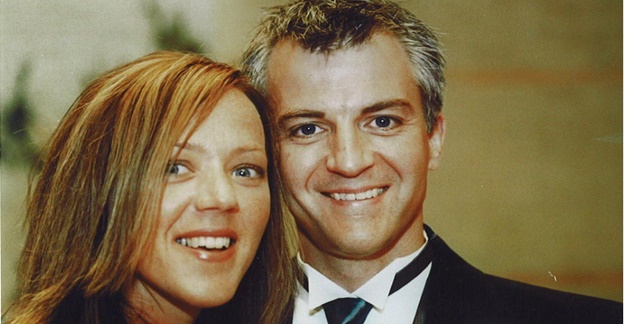
David Antonuccio, a close friend for 20 years since we met around the issue of antidepressants and suicide, and now an emeritus Professor of Psychology at the University of Nevada, organized a Skills and Pills for Depression meeting in Reno on October 4 2025.
The recordings of the talks are available now. The quality is not perfect, even after a clean-up operation, but there is enough to get a sense of the interactions.
The meeting kicked off with a talk by David A on Skills for Depression making the case that cognitive and other psychotherapies that aim at imparting skills to manage depression should be considered equal to pills as first-line treatments for depression.
I have posted David’s talk on my You Tube channel and you can see the ratings for his talk below, which are stellar. It comprehensively covers the evidence supporting the idea we should have a choice about getting psychotherapy rather than pills. David is passionate about the comparative lack of access to therapy – the lack of choice people have when they need help.
David’s talk is not embedded here as embedding is not my strong point and I’m worried the site might crash if there is too much material embedded in one post.
David’s talk was followed by one from me on Pills for Depression. A version of the talk, recorded two days later, features in the Health, Care and Science post. The original at this meeting version, but with terrible quality, is on my You Tube channel.
(There is another post linked to the Reno meeting which may be of interest here – Good Care in Healthcare.)
The two lectures were followed by a Panel that featured Kim Witczak, who has been a Consumer Representative on FDA Psychopharmacologic Drug Advisory Committees from 2016 to 2025, along with David A and David H. This was chaired by Deacon Schoenberger.
My hope going into the meeting was that the 220+ attendees would be angry, confused, and either want to give out to the panellists or be inspired to offer thoughts on possible ways out of the quagmire in which we are now in and being sucked deeper and deeper. We need rescuing but it was unlikely I guess that anyone hearing about these problems for the first time was going to have a lightbulb moment and throw us a lifeline.
The format didn’t suit getting lifelines for a few reasons. The camera and audio set up was never going to be able to pick up audience input directly. So at the break after the talks anyone with questions was invited to write them down to be read out by Moderators – Faraaz Merchant, a psychiatrist, and Dean Hinitz, a psychologist.
This worked passably well but lacked the emotional heft that comes with a direct interaction. The Panel is embedded here.
It’s worth watching this before reading any further. In addition to the questions asked and perhaps not answered here there were several other questions which there was no time to ask or answer/not answer, which are listed below. They also feature in the first set of comments on this post where I will provide some answers/non-answers.
The Panel made me slightly uncomfortable because more of the questions seemed one’s for me to answer rather than Kim or David but also because one of the questions below points to some non-answering – which was the case and partly my fault as it was me answering on non-answering on the point made.
Questions
S stands for Student. P for Psychologist. L for lay person. A for anonymous. If no A present, people gave their names and emails
S What part of research do you think should be expanded when discussing SSRIs?
P The participants’ question asking about the balance between negative side effects and meds and increased mental health symptoms with withdrawal was not addressed…rather the panel devolved into a discussion about PSSD…not addressing their concerns. As an observer this seemed to play out the panels own expressed frustrations with providers not listening to the concerns of the client.
L Can you speak more about AI and “total propaganda”?
MFT-Intern What about drugs for things such as bipolar/schizophrenia?
S Stigma around mental health is still a major barrier on college campuses. How can students help shift the conversation to informed choice and empowered advocacy?
Looking to the future, what emerging treatment approach for depression gives you the most hope and why?
S Do you think depression along with other mental disorders are over or under diagnosed in today’s society? Why?
S Best approach to start a conversation about depression with a close friend and offer help?
S Why didn’t the FDA analyze the results of the positively spun drug tests before approving its publication? If they had, were they in a position to prevent its publication? Are there more suicide attempts for those under intensive social work over CBT because the social work adds stress to the patients?
Is there a correlation between suicide attempts in patients and the type of treatment those patients were undergoing? Do pharmaceutical companies prefer using drugs over psychological treatment? If they do, why? If someone has a hard time concentrating on learning a new skill because of a mental disability, what techniques should they use to concentrate better? Should doctors be held more accountable for patients who committed drug-induced suicide/homicide or other crimes?
A How well do improvements on depression rating scales reflect improvements in a person’s actual quality of life?
A P How can research data be suppressed-ethically? Are these non-psychologists? Suppressing data or “spinning” data is against our ethical standards and against everything science represents. This harms people-so even if it is non-psychologists doing the research, falsely representing data violates the “do no harm” mandate of medicine. Are the researchers held accountable in any way for this? No wonder the general public shows such doubt in science.
BackDrop
The meeting required me to state that I would be adhering to Evidence Based Medicine (EBM) but in fact my talk was a direct assault on what is usually thought of as EBM and I knew beforehand it would be. I’ve never given one like it before. Kim and Woody Witczak featured all the way through but Kim had no more than a hint she might feature at some point.
There were 220 attendees, among them students were possibly the majority, but there was a large contingent of psychologists, some members of the public and 4 doctors.
I had pushed for letting Democrat and Republican Senators and Representatives know about the meeting with an invitation to them or members of their teams or any experts they might wish to send to come. Who knows maybe some were there but likely not – at least in part because I don’t think the mission to let them know was all that thorough if it happened at all.
The only bit I know for sure did happen was a letter I sent to the American Psychiatric Association letting them know about the meeting and inviting them to attend and/or advise me on how best to frame the issues.
Ratings
Most meetings these days – like everything from buying a bar of chocolate to getting a visa to travel to the US – comes with emails asking you to rate how we did today. This happens automatically, even when the US government has ceased to function in the case of visa applications.
It was the same with this meeting, but of the 220 or so people it looks like only 43 responded. This is not a complaint on my part – I would have been one of 177 others.
Of the 43, 33 were mental health professionals, 6 were students and 4 didn’t state their ‘gender’.
In terms of learning objectives met, 46% gave a top rating of 5, 25% rated 4, 20% rated 3 and the remaining 9% rated 2 or 1 (poor).
David Antonuccio got a 73% 5 rating with no one rating 1 or 2.
I got a 38% 5 rating with 15% rating 2 and 6% rating 1. Whatever else you make of this it can’t be put down to medical hostility with only 4 doctors there, most of whom were semi-complimentary.
The Panel session wasn’t rated.
S What part of research do you think should be expanded when discussing SSRIs?
A – I don;t think it’s research that is needed first of all. We need a vision about what SSRIs are actually doing if they are not correcting a serotonin defect. Then we need to see how peoples experience on these drugs maps onto that vision. This is research but it’s not chopping up rat brains., or brain scans or clinical trials, measuring anything.
I would like to see more studies comparing SSRIs to nondrug options (e.g. cognitive therapy, behavioral activation, assertiveness training, exercise, problem solving skills, etc.) with at least 6 months follow-up. But these studies are enormously expensive and time consuming to implement. In the mean time, the comparative studies that currently exist do paint a picture suggesting that the nondrug psychological options are as effective as the medications in the short run and that they offer more enduring benefit when longer term data are collected. In fact, I am not aware of any comparative studies that show an advantage of the medications over psychological interventions for depression when using patient ratings of depression at 6 month followup or beyond, even when the depression is considered severe.
As far as placebo controlled trials involving antidepressant medications, I would like to have these studies go a minimum of 6 months to get a more accurate picture of what happens when patients are kept on these medications for months, as they often are. I would also like to see an effort to ask participants whether they can guess their actual condition. Invariably, when this is done, patients can guess their condition with a high degree of accuracy, suggesting that many if not most of these studies, are not actually double blind.
David
These studies are not the answer. When they are done are you going to ‘follow’ them? Or are you going to engage with the person in front of you? Many of the people in front of any therapist are on meds and not being helped by these meds but you are powerless to be scientific and to practice trauma-informed care as it were by helping him or her get to grips with what these drugs may be doing to him. There is no therapy you have access to at the moment – except perhaps an interoceptive exposure therapy which has not yet really come on stream – that will help you to help him and without being able to grapple with this I can’t see how therapy input can do much except make things worse.
You’re dissecting the skills and pills out from the practice here. If the patient is not with a wise and courageous prescriber or therapist what chance does he have even if all the studies you mention have been done?
Back when the SSRIs can on stream the recommendation was to continue AD treatment for 3 months after recovery – now the view is you need to on these meds for life. I’m talking about melancholia back then, now we are talking about cases of depression so called that are mild and will heal spontaneously without therapy or meds in a few weeks. What in God’s name are we doing?
D
It’s important to always engage the person in front of you. On that I agree with you. But from my perspective, comparative studies can help us decide where to start with a patient who is trying to decide what are reasonable options for treating their depression. Despite all of the data that currently exist, most people believe (in contrast to the existing data) that medications are their most powerful and effective option. That is just not accurate. That’s my continuing pet peeve. And I’ve had this pet peeve for over 40 years now. My answer is meant to address the student’s question: “What part of research do you think should be expanded when discussing SSRIs?”
David
As Austin Bradford Hill told us all and anyone who has looked closely at what RCTs do, whether comparative or non comparatie, RCTs can tell neither you nor me anything about how to treat the person in front of us.
At best they say it is just not right to say this drug or therapy does nothing. But just as I would say if the person who coms to me and I decide to try an SSRI – and there can be good prior reasons such as other family members have been helped by this – I will tell him/her that he should be able to recognize a useful effect within days of starting and if he cannot, no matter how good the so called data look he needs to stop treatment – perhaps even taking it on his own initiative rather than consulting me – to do so.
Does CBT or any therapy have any indicator that therapists can give a person as to whether what has been started is likely to or better again is actually helping and worth continuing with – other than the attendee thinking their therapist is a nice person?
As regards meds being the most effective option, as you’ve heard me say often SSRIs are not antidepressant in the sense of good for treating severe depression but neither is CBT. As far as I know there is no therapy that has been shown to work for what used to be called endogenous depression or melancholia or even just hospitalized depression.
So the first port of call should be to tell the person you have a disorder that will on average recover after 12-14 weeks without any meds or therapy and you will likely be more resilient if you recover that way. We can always turn to a therapy or a med if this doesn’t work out. Very few docs say anything like this. What about therapists?
These days a larger proportion of those seeking help do so because for managed healthcare stress, or managed education system stress, or growing societal aggression etc – none of which may recover by 12-14 weeks but should we see therapy or meds as an appropriate response to this?
D
P The participants’ question asking about the balance between negative side effects and meds and increased mental health symptoms with withdrawal was not addressed…rather the panel devolved into a discussion about PSSD…not addressing their concerns. As an observer this seemed to play out the panels own expressed frustrations with providers not listening to the concerns of the client.
You are right and that was partly my fault for raising PSSD. The problem is there is just too much to tell people and one of the points I was trying to make but didn’t make clearly enough was that besides withdrawal there is damage which may never recover. .
The Reno meeting helped me get some of these ducks lined up and I’ve sent two articles for review on the issues raised by Q 1 and by your question here. I guess this means watch this space
From my perspective, based on the comparative research I reviewed at the conference, the psychological treatments alone are a powerful option for depression, even if severe, without the associated medical risks and side effects, especially when long term benefit and risk is considered. That is not to say psychological treatments are without risk. Of course they also have risks, But that’s where the comparative studies come in because it is possible to see the reduced risk of nondrug treatments in these studies. Also from my perspective, all drug treatments are actually “combined” treatments in the sense that they are offered by a psychiatrist or other prescriber in the context of a therapeutic alliance. So most of whatever risks come with psychological treatments alone (e.g., induced false memories, boundary violations, etc.) are also included in the medication “alone” treatments.
I am not for one minute saying drug treatments are a better option than therapy. I’m saying both have become the illness they purport to treat – and en route used to justify keeping the therapist and prescriber in business.
The therapy and SSRI studies have not been done in severe depressions. They show minimal benefits in the more severe end of the mild spectrum and this is used rhetorically to justify keeping the show on the road but the conditions the research has been undertaken in resolve spontaneously for the most part – or did before we made people perpetual patients.
Things are getting steadily worse in the US as you have a malignant form of for profit care that does not leave any space for genuine or decent human interactions. But they are not much better in Europe. Listening to what people who engage with the system are being out through it is difficult to come away with a view other than the degree of lunacy increasingly built into our mental health systems is off- the scale
D
I think there is ample evidence that therapy offers more enduring benefit (beyond 6 months followup) for depression for the time-limited, problem focused, skill oriented therapies, compared with the medications. I think that is worth paying attention to, separate and apart from the reduced medical risks. And the work of Derubeis and Hollon show similar advantages for therapy over the medications even in patients who would be classified as severely depressed (>20 on the 17 item Hamilton scale). But I would agree with the idea that we probably overemphasize the specific effects vs the nonspecific effects, what I think you mean by “genuine and decent human reactions”. And please notice I am not calling for therapy that lasts for more than 3 months.
David
I think there is good evidence that exposure therapy can deliver benefits that last longer but this doesn’t apply in depression. The exposure data has stemmed from the management of phobias, OCD and panic and then not even all features of these. Hopefully we will be able to add data for interceptive exposure therapy to that soon.
But how about the latest craze Mindfulness Based CBT? There is brainwashing element to this not found with exposure therapy which is likely to lead those exposed to it saying for the rest of their lives that it helped – but does it? I doubt it. Has it anything in common with exposure therapy? Not that I know of. But they travel under the same banner and how is an unwary clinic attendee to know what they are getting.
I could throw into the mix here that Isaac Marks who if not the outright creator of exposure therapy did the most to really put it on the map, two decades ago of more embodied it in computer programs like Fear Fighter – which never got anywhere because in the UK at least it was up against the hostility of a CBT establishment, a number of whom had been big into recovered memories and many of whom likely still promote trauma informed care.
I swim in a world of pronouncements by APsychA and the Royal College of Psychiatrists in the US which I think are scientific and professional suicide notes in addition to being disastrous for patients. You swim in a world of APsycholA and the British Psychological Society which are equally disastrous. These bodies are most concerned about their own survival and status and will use any supposed evidence that furthers that rather than actually advocate for giving the public a realistic sense of when and what extent either therapies or meds can make a meaningful difference in out growing societal mess
D
David.
Re Psychotherapy
Try reading some of the critics. Try William M Epstein’s 3 key books, The Illusion of Psychotherapy, Psychotherapy as Religion and his last Psychotherapy and the Social Clinical in the United States, Soothing fictions or try Paul Maloney’s The Therapy Industry among many others.
L Can you speak more about AI and “total propaganda”?
There is a post from a few weeks ago on this site called The Miracles of Artificial Intelligence which picks up the issue of Chat GPT etc and its role in advising young parents on whether they should get an RSV vaccine for their child when it is still in the womb or give their child an injection of a monoclonal antibody at birth – or neither of these.
This will be supplement in the next two weeks or so by a post here looking at the interaction between Chat GPT and related AIs and Electroconvulsive Therapy and also Transgender issues.
These both feature the Total Propaganda issue. Certain points of view that suit certain interests get assimilated into AI as ‘evidence’ – even though they may defy common sense and as a result we risk losing common sense and perhaps the ability of anyone who is a little bit older to pass on any perspectives (I hesitate to call it wisdom) to Gen Z or others.
But there is another aspect to all this that I think is missing. Full AI as opposed to the AI we now have if put to the test might well endorse Relationship Based Medicine rather than Evidence Based Medicine – as by extension I guess Relationship Based Living. The forthcoming ECT and AI post will bring this point out
I know very little about AI and what I believe about AI, I’m afraid, has been influenced by all of the science fiction books I’ve read, which is to say, it concerns me. I am currently reading the new book about AI called “The Coming Wave” and the author seems to share my concerns.
MFT-Intern What about drugs for things such as bipolar/schizophrenia?
This got answered in the panel. The rates of suicide on these drugs at least in clinical trials are even higher than for antidepressants in antidepressant trials. In real life the rates of suicide and homicide are equally high on antipsychotics as they are on antidepressants. While manic-depressive illness always had a high suicide rates most depressions don’t and schizophrenia suicide rates were even lower than mild depression rates before we started using antidepressant drugs
In addition as with antidepressants, no-one gets to see the data from antipsychotic trials – not even FDA – and you can assume pretty well the articles on these meds are ghostwritten – soon to be written by AI
I defer to David H because I consider him to be a world authority on this matter.
LMFT-Intern What about drugs for things such as bipolar/schizophrenia?
The rates of suicide on these drugs at least in clinical trials are even higher than for antidepressants in antidepressant trials. In real life the rates of suicide and homicide are equally high on antipsychotics as they are on antidepressants. While manic-depressive illness always had a high suicide rates most depressions don’t and schizophrenia suicide rates were even lower than mild depression rates before we started using antidepressant drugs
In addition as with antidepressants, no-one gets to see the data from antipsychotic trials – not even FDA – and you can assume pretty well the articles on these meds are ghostwritten – soon to be written by AI
(See below – I have since learned that LMFT stands for licensed Family and Marital Therapist).
S Stigma around mental health is still a major barrier on college campuses. How can students help shift the conversation to informed choice and empowered advocacy?
Looking to the future, what emerging treatment approach for depression gives you the most hope and why?
Looking to the future, I think getting people out of mental health systems and indeed out of health systems if possible is the best bet. An increasing proportion of people in our systems are not ill. They are seeking help in the wrong places or are being seduced into taking things for disorders they don’t have.
Pharmaceutical companies, therapists, counsellors and lifestyle coaches are making money out of a wellness industry that trades more on appeals to something closer to beauty rather than health. I guess we are all susceptible to this because its a competitive world
Hi Dr. Healy,
I appreciated the thought-provoking questions you raised about the current state of treatment for psychological issues, but I respectfully challenge your position on psychotherapy, which you seem to reduce to simply part of the “wellness industry”. Before there was a “wellness industry” there was psychotherapy, and this psychotherapy had as one of its functions not just to improve symptoms, but to help the patient individuate from internalized social/cultural values that were at odds with his own instincts. This conflict–between one’s instincts and the societal/familial priorities instilled in him–can contribute to an unsatisfying life, emotional symptoms, and personality issues. Absent larger systemic changes, the individual bears the burden of addressing their own relationship to society. For this purpose, psychotherapy/psychoanalysis can help with the individual’s problems in living.
Steven Dente, LMFT
Psychotherapist/Psychoanalyst
Steven
I had no idea what LMFT stood for up to this and I agree that in some respects family therapy can do some of what you mention in this comment.
However before psychotherapy of any sort, there were rabbis, priests, pastors, imams who gave pastoral support and sometime advice which at least in some instances was wise and realistic – more so than you might get from psychotherapists in general. This was often because they approached the issues from a this is life perspective rather than therapy for a disorder.
If you are going to say there is a disorder and apply a therapy (which implies science) the first step is to be sure you have it right so that you do not make things worse (Do no Harm). That there is a disorder, which in a large proportion of cases there won’t be. And that rather than generically treat a non-existent average family, you have selected a technique that matches this person – or group of people in this case – which family therapists likely don’t do.
In the case of therapies, the next step tends to be some degree of standardization. In this area since what is often perceived as a Freudian debacle, there has been on onus on therapy to prove it works and psychotherapy confronted by the aggressor has aped the aggressor and formulated Magic Bullet views (as in CBT – that echo drug views about serotonin deficits). Psychotherapy has also uncritically adopted RCTs etc which, as with drug RCTs, tell us nothing about how to treat the person in front of us. The result is most therapies begin by working from the manual pretty well regardless of the person in front of them – there is little or no awareness of individual differences among patients which in fact ground markedly different responses to drugs and to therapies.
I think there are a growing number of potentially effective therapy techniques – Rogerian approaches for instance which although now neglected seem more suited to extraverts, whereas the C part of CBT seems better suited to introverts.
There are politics at play. CBT became a force by stealing the results of behavior/exposure therapy and marketing these to claim CBT is evidence supported when very few CBT therapists know much if anything about exposure therapy or how to do it properly and very very few adopt it.
We also have CBT dudes wandering off into what gets called Mindfulness Based CBT which is neither proper Buddhism nor Exposure Therapy
In terms of the consequences of SSRIs, I’m very interested in Interoceptive Exposure Therapy and will hopefully have an article coming out about this soon. So I believe that used judiciously many of these techniques can help – but my point was they are not being used judiciously. Partly because therapists in general make a living out of treating people for ever. Partly good intentions – a wish to help but not realizing the best help is to tell the person they don’t have a mental disorder.
The biggest failing though is not being scientific. A loss of the ability to see the effects of pills right in front of you and willingness to force prescribers into a scientific assessment of what is happening your joint patient. This is where you along with doctors gaslight and can traumatise patients.
I haven’t thought much about how badly family therapists do in this respect because family therapy is comparatively little used but despite not encountering it as much I’ve had several folk who have come my way after disastrous family therapy input. There is as the talk mentioned what the manual might say about Family Therapy or CBT as well Meds, and what happens in practice.
David
There is a debate in the therapy literature about whether the “specific” techniques of therapy (e.g., breathing exercises, cognitive exercises, increasing pleasant activities, exposure) are as important or more important than the “nonspecific” aspects to therapy (e.g., the therapeutic alliance, confidentiality, talking about problems in general, etc.). I think the specific advantage of exposure techniques is clear at this point but the truth is most of the other specific techniques may just be an extension of exposure. I might disagree with my dear friend and colleague David H that any therapist does treatment by a manual except in a structured research protocol. Therapy is more dynamic and adaptable to the patient in front of the therapist I think. Though perhaps that is what David H means when he refers to Relationship based Medicine. That might be what I refer to as the “nonspecifics” of therapy.
Relationship based medicine (RBM) is not just about non-specific factors in treatment. RBM means generating evidence/facts by exploring what is happening this patient and trying to achieve a consensus with them which necessarily will involve a degree of deferral to them when grappling with aspects of their mental state that are stemming from the meds they are on.
Evidence as in EBM – as in the published research – is not evidence when it comes to this patient. Evidence in this person’s case remains to be establish when they come into the room and it isn’t being established – especially not by therapist who steer clear of even beginning to establish it for fear of being told that they aren’t qualified to practice medicine. If they aren’t willing to do science – that is try to establish the facts of this case – they shouldn’t be in the business.
Someone who cannot come to a consensus with others, who insists they do it his way, is a narcissist. Part of the problem is that we risk ending up in a room with a doctor or therapist who has Narcissistic Doctor Disorder or N Therapist D
D
Hi Dr. Antonuccio,
Thank you for your response. I would agree that the “nonspecifics” would be a considerable part of the mutative benefit of therapy. My question would be if the studies supporting the benefit of exposure therapy control for the presence of the therapist? In other words, is it specifically the exposure techniques, or the presence of a kind and curious exposure therapist, that bears on the outcomes in these studies? There is a lot of research supporting the benefits of psychedelic assisted therapy, for example, but like you mentioned in your presentation about the Placebo effect, it’s hard to isolate the actual psychedelic as the agent of benefit when it’s being administered within the context of a potentially strong transference relationship with a provider. And more to that point, the dose-response research on therapy would suggest that the more “exposure” a patient has to this (hopefully) kind and curious therapist, the more it would benefit them.
Steve Dente, LMFT
Good CBT always starts with a functional analysis and collection of baseline data, looking for possible connections between thoughts, behaviors, and feelings and the person’s environment. If this is included in what you mean by Relationship Based Medicine, then I am on board with that.
David
I know some great therapists who do exactly what you outline here – but I can count their number on the fingers of one hand and they have usually had a proper – and i mean rigorous – behavior therapy training and background.
But no this is not part of RBM. RBM applies across all of healthcare and is scientific in the sense of aiming at coming to a consensus with the person who has come for help and has a privileged position in respect of any interventions that have been started, a position that requires the treating person to put manuals and habitual approaches to one side when the person on treatment is not responding as expected or not benefitting.
This ideally would extend to taking into account the effects of the meds they might be on – not just psychotropic drugs – hundreds of other meds can have mental – behavioral effects. Is there an exposure therapy we can wheel out for psychologists who have a phobia or doing this?
D
Thank you for the detailed response. While I don’t practice family therapy, that is the name of my license, so that might add to some confusion. I practice individual psychotherapy and psychoanalysis, which seems quite different from the types of therapy you describe. A distinct feature of psychoanalysis, and in particular interpersonal psychoanalysis, is a focus on the subjectivity of the patient. Indeed, “giving advice,” as you suggest priests and rabbis might do, could be undermining the needs of the patient, with the clergy’s authority replacing the help-seeker’s ability to understand their own ambivalence and come to their own answers. Much more useful, most psychoanalysts would argue, would be to help the patient clarify the intrapsychic conflicts standing in the way of the desired changes in their lives.
It sounds like you agree that thinking in terms of “disorder” can be quite limiting, as some patients might come to therapy seeking help for lifelong patterns that do not fit neatly within DSM or ICD categories. That’s why I think the best practice would first be to listen to the patient as to what they think the problem is and what they are coming to therapy to change. The scientific “data” of the therapeutic enterprise should be the patient’s subjective confirmation that they are receiving meaningful help, which as you rightly mention might not be captured by the current methods of conducting research. But I think the issue is not with therapy itself, but rather the ways therapy is applied and studied.
As for the comment about therapist’s making a living out of treating people forever, I disagree, at least as a generalization. Deeply rooted personality issues often take time to change. Freud himself thought it was essential that treatment end at some point, but not without it having actually started. Pursuing a college degree, music lessons, or martial arts training could take years, if not decades, but working through lifelong patterns of living is expected to be finished within a few months. It’s just not realistic and does not account for psychological defenses which actively work against our consciously-desired changes. These defenses were hard-won in our early lives and became necessary adaptations to survive in our interpersonal milieu. That said, patients are free to end their treatments at any time they wish.
Finally, psychoanalysis usually conceptualizes anxiety and depression as a symptom, rather than a cause, of psychological problems. So to simply treat it as a “disorder” in need of medical intervention often misses the bigger picture of suffering that is taking place. I think the bigger issue in the field today is the brief and only temporarily effective “solutions” being offered to people under the guise of psychological help. I think we see more psychological treatments today that haven’t begun rather than haven’t ended.
I think psychotherapy, especially approaches that emphasizes understanding the patient’s subjective experience and long-standing personality patterns, is a vital means of helping patients who are suffering, whatever their so-called “disorder” or symptoms.
-Steven Dente, LMFT
Steven
I hate to say it and I do not mean to be impolite but I genuinely began to lose the will to live as I read down through your comment. Much as religions do, you’re assuming a ton of things that I don’t think any of us have a right to assume.
It’s almost for certain that lots of those coming to see you will have different personality profiles to yours or Freud’s or the personality streaks – traits that lead people to find analysis appealing and equally leads some people to find the Cognitive element of CBT appealing – but adapting the picture of personality profiles you’ve laid these out in your comment, how do I know the mismatch doesn’t reflect your personality pathology rather than any pathology inherent in the person who has come to you for help?
My opening remark was not meant to be impolite but was semi-deliberate. Losing the will to live was my genuine reaction – which in some respects is a mirror image of the situation Freud faced that caused him to ‘invent’ transference reactions. What aspect of my prior development do you think my loss of the will to live reflects?
Neither you nor I knew Freud but many who met him like Janet, Jung and Adler outright thought he was wrong – based partly you’d have to think on having met the man and factoring this into account when thinking about what he wrote. Jung thought he was entirely wrong to figure that we are all identical and its just the way we handle early libidinal issues that differentiates us into different personalities.
As it turns out Jung’s distinctions between extraverts and introverts can be show to predict how much anesthesia it takes to put us to sleep for surgery and our response to SSRIs meds. So it looks like these personality distinctions have a biological basis. Close to everyone who has more than one child remarks on how different their children are from even before they get to walk or talk. Do you think any number of decades of analytic input can change a biological basis of the kind of that seem to underpin these personality dimensions?
David
S Do you think depression along with other mental disorders are over or under diagnosed in today’s society? Why?
Vastly over-diagnosed. Because our doctors have to give us Depression in order to give us Pills and they’ve sold the idea these meds are sacraments and magical. Its all rather like the Catholic Church use to support being a daily Mass goer and communicant – once you have salvation in your hands it’s very hard to stop drawing people into what you are offering – and very hard for us to shun these options without feeling we might be doing something wrong
I agree with David H here. Depression is vastly over diagnosed and marketed by design. One of the problems with “screening” for depression is that there are so many false positives, that is people may be labeled as depressed on the basis of a few symptoms, when they will recover on their own without intervention.
S Best approach to start a conversation about depression with a close friend and offer help?
Yes Except maybe make that a few close friends – you probably need a range of views and also need some way to avoid Tik Toxicity – where influencers talk you into doing things that ain’t going to help – as wit the recent Wall St Journal article which will feature in a post on RxISK.org in a few days time
I think the best strategy for starting such a conversation with a close friend might be to ask “open-ended” questions of your friend. How are you feeling? How are you spending your time? What do you like to do for fun? Also, sharing your own personal struggles with a close friend can open some doors here. One of the best lay resources for addressing depression is a book by psychiatrist David Burns called “Feeling Good”. He also has a more recent book called “Feeling Great” that I have not yet read. And he has put out an app called “Feeling Great” that is available for free. It offers cognitive strategies to address depressive symptoms.
A focus on Feeling Great worries me. It sounds terribly self-centred. In terms of open-ended questions, I’d steer toward what matters for you, what are your strengths and where do you want to get rather than what’s wrong with you. Time and again, I end up thinking I probably wouldn’t be managing as well as this person is if I had to grapple with what they are grappling with. Time and again I see people who are now having to deal with therapists who suggest their families or or backgrounds aren’t right and need major reconstruction. They are often bewildering at these suggestions and don’t realise they are dealing with a therapist or doctor who has more problems than they have
D
My friend and colleague Barry Duncan wrote a book entitled “What’s Right with You”. I always like the emphasis on a person’s strengths, while not ignoring weaknesses.
And I do agree that “insight” oriented therapy does not work well for depression. There have been studies that show that. People often have good reasons for feeling depressed. In fact, it might be abnormal not to have such feelings given the challenges that people are presented with. Gaining insight into “why” someone is depressed is not usually enough to lead to improvement. This is where going beyond insight and making some actual changes, by acquiring new skills or helping someone modify a toxic environment, can help. Beyond the first session, I rarely found it useful to dwell on a person’s history. For the most part, people needed support in addressing what was happening currently in their lives.
S Why didn’t the FDA analyze the results of the positively spun drug tests before approving its publication? If they had, were they in a position to prevent its publication? Are there more suicide attempts for those under intensive social work over CBT because the social work adds stress to the patients?
Is there a correlation between suicide attempts in patients and the type o treatment those patients wer undergoing? Do pharmaceutical companies prefer using drugs over psychological treatment? If they do, why? If someone has a hard time concentrating on learning a new skill because of a mental disability, what techniques should they use to concentrate better? Should doctors be held more accountable for patients who committed drug-induced suicide/homicide or other crimes?
There are too many questions here to answer all of them.
First – Companies often publish negative studies as positive and then submit the study to FDA and tell FDA that it is negative. FDA do nothing about this. Why not? It’s not FDA’s job. They are a bureaucracy not a detective agency or a police force.
Journal editors like the editors of the New England Journal of Medicine in particular know these studies are false in important respects as well the Covid vaccine trials but they accept and publish the article. Why – they make money out of it. In the case of vaccines – it may be more complicated
Re what can people do when they can’t concentrate to get projects done. We have lost the ability to recognise we can’t be good at everything. We all have certain strong points and less strong point and success in life often depends on finding the right niche and the right partner etc. We need to be able to recognize what jobs/roles and company suit us and not use meds or therapy to try to get ourselves to fit into situations we are just not suited to
The drug companies have to submit their data on a new drug to the FDA in order to get approval. The FDA has no control over whether the data are published or spun in a future publication.
Companies don’t actually submit the data. The data are the people in the study. FDA get sets of numbers but not the details of people whom they can interview to see whether the numbers apply to what happened in this person’s case. What FDA get legally is Hearsay, not evidence
D
Fair enough.
A How well do improvements on depression rating scales reflect improvements in a person’s actual quality of life?
For SSRI antidepressants they don’t. Hamilton Depression Rating scales get a doctor to rate if the illness is improving. Quality of Life Scales ask very similar questions and it is often us who are being given the meds who do the rating.
No SSRI or related antidepressant has ever been shown to work on Quality of Life Scales
I agree with David H here.
A P How can research data be suppressed-ethically? Are these non-psychologists? Suppressing data or “spinning” data is against our ethical standards and against everything science represents. This harms people-so even if it is non-psychologists doing the research, falsely representing data violates the “do no harm” mandate of medicine. Are the researchers held accountable in any way for this? No wonder the general public shows such doubt in science.
It’s not research data that is being suppressed. The so called randomized controlled trials are not trial designed to inform clinical care. They are randomized and controlled but are assay systems designed to get a license to make a claim about a drug.
They are not Evidence. They are Hearsay. They should not be built into Standards of Care or Guidelines etc.
Email me if you want a fuller article going into all this in detail
But if you are saying psychologists can cast a stone because they don’t sin – well I can’t agree with that
The file drawer problem (putting negative studies into a file drawer instead of publishing them) is a problem across all scientific disciplines for a variety of reasons (negative studies are less interesting, negative studies are less likely to get accepted for publication, negative studies may not serve the interest of the funder, etc). Spinning data in favor of a desired outcome or even making up data altogether is also a problem across all disciplines. Yes, it happens in psychology also. It is difficult to catch people in the act but a group of scientists that David H has collaborated with have succeeded in this area on multiple occasions, the most famous of which is Study 329. David H and colleagues wrote a book about it called “Children of the Cure”. It is chilling and well worth reading in my opinion.
‘and said that his company had learned from its mistakes.’
Leaving the Paxil/Paroxetine Patients, precisely, where?
Paxil: In the criminal information, the government alleges that, from April 1998 to August 2003, GSK unlawfully promoted Paxil for treating depression in patients under age 18, even though the FDA has never approved it for pediatric use. The United States alleges that, among other things, GSK participated in preparing, publishing and distributing a misleading medical journal article that misreported that a clinical trial of Paxil demonstrated efficacy in the treatment of depression in patients under age 18, when the study failed to demonstrate efficacy. At the same time, the United States alleges, GSK did not make available data from two other studies in which Paxil also failed to demonstrate efficacy in treating depression in patients under 18. The United States further alleges that GSK sponsored dinner programs, lunch programs, spa programs and similar activities to promote the use of Paxil in children and adolescents. GSK paid a speaker to talk to an audience of doctors and paid for the meal or spa treatment for the doctors who attended. Since 2004, Paxil, like other antidepressants, included on its label a “black box warning” stating that antidepressants may increase the risk of suicidal thinking and behavior in short-term studies in patients under age 18. GSK agreed to plead guilty to misbranding Paxil in that its labeling was false and misleading regarding the use of Paxil for patients under 18.
https://www.justice.gov/archives/opa/pr/glaxosmithkline-plead-guilty-and-pay-3-billion-resolve-fraud-allegations-and-failure-report
One can only imagine the motives of GSK in having their counsel write this letter to the editor of the Chronicle of Higher Education, a letter so contrary to the plea agreement they signed in the recent DOJ case. The editor’s response [in italics below] adequately refutes Mr. Lee’s assertions, but why bother to write it in the first place? It completely undermines Sir Andrew Witty’s loud claims that GSK is turning over a new leaf:
https://1boringoldman.com/index.php/2012/10/14/the-only-enduring-contract/
Herein lies the problem of settling the case rather than allowing it to go before a jury – an endless regress of not-so-plausible denials and word play. While it may seem that GSK is protecting the authors, they’re really throwing them under the bus. And the comment that GSK “continues to believe that the journal article reflects the honestly held views of the clinical-investigator authors” achieves high tragicomedy in substituting the authors’ views for scientific proof and including the word honestly in anything that has to do with Paxil Study 329. Drs. Leemon McHenry and Jon Jureidini make quick work of Mr. Lee’s ingenuous arguments:
Drs. Leemon McHenry and Jon Jureidini were also clear about the widely reported change in GSK policy, “The fact that GlaxoSmithKline continues to dispute vigorously the report of this study demonstrates, in our view, that the company is still out of step with the companywide overhaul initiated by the new CEO, Andrew Witty, to prevent ‘unacceptable’ mistakes that led to the record $3-billion fine.” This exchange highlights the reason that this article must be retracted from the literature. The ethical obligation to patients lies within the medical profession – in this case with the American Academy of Child and Adolescent Psychiatry.
The fact that “GlaxoSmithKline cc’d the journal’s current editor, Andrés Martin, on Mr. Lee’s letter at a time when Dr. Martin was being pressured by demands from the international scientific community to retract the article” makes it infinitely clear that GSK has been in charge of this article from its inception, and remains at the helm rather than the stated authors. Likewise, copying Dr. Andrés Martin who had nothing to do with publishing this article implies that it is the editor’s journal, rather than the official journal of the American Academy of Child and Adolescent Psychiatry. The only enduring contract in this case is between the Academy and the patients of the physicians they represent…
https://www.forbes.com/sites/matthewherper/2012/10/11/with-transparency-pledge-glaxo-makes-promises-no-other-drug-company-has/
In Glaxo’s press release announcing the settlement with the feds, he said that the Avandia and Paxil controversies “originate in a different era for the company” and expressed his “regret” and said that his company had learned from its mistakes.
These comments were from 13 years ago before the Reno meeting – almost to the day.
In Glaxo’s press release announcing the settlement with the feds, he (Andrew Witty – later CEO of United Health) said that the Avandia and Paxil controversies “originate in a different era for the company” and expressed his “regret” and said that his company had learned from its mistakes.
Learnt? How to avoid getting caught again? It is always the case that we made mistakes in the past, never that we have a structural problem that ensures repeated ‘mistakes’ ? repeated loss of life. But of course this repeated loss of life is the fault of doctors (and therapists) who are not keeping their patients safe. Everyone knows doctors (scientists) are responsible for the person right in front of them who is now taking a hazardous substance (it would not be prescription-only if it were not unavoidably hazardous) and we expect of course as good scientists doctors will welcome any observations from therapists who have noticed some change in their patients after the patient reports starting a new med a few days previously. Of even without the patient reporting it – because these changes are pretty obvious. How can anyone hold GSK responsible for doctors and therapists not being scientists – not doing their jobs?
D
Well said, David and Kim. Great arguments from you two.
Doctors are abusers, there is no question about that.
‘The Patient is the data.’
Not in the eyes of doctors. How can they tell if they are an abuser.
‘If you are asking me to manage it, I’m too old.’
Maybe I’m too old too. But abusers of psychiatry and their pills have done untold damage to our minds and it takes plain speaking to tell of abuse. Abuse on this level whether by silence of doctors or psychiatrists protecting their pills, where is the voice?
Is litigation the only answer?
Certainly not in the UK, and the MHRA have covered this up for decades.
It’s a mind game and you have to be strong to keep presenting as normal, before you took the pills, as after you took the pills, the weight of denial, can make you apoplectic with fear for your sanity, and their judgement and persecution, could send you in to a bat-shit hell.
In the last 24 hours, I have read Nobody’s Girl, just to see what real abuse looked like.
In Reno, some reasonable questions, and answers, but do they really understand what happens when
people die from these drugs, and when patients take matters in to their own hands and try to sue doctors and pharmaceutical companies, and all the damning accusation come back and hit them in
in the mind they thought they had and it all comes flooding back that doctors and psychiatrists have no idea that they might have killed their patient. Unconsciously or not, but it doesn’t seem to matter.
David and Kim, hit home. I hope the audience came away with the understanding that if they understand anything at all, it is that through them, that a better future is on offer to the current abuse that resonates throughout doctors and psychiatry, who have turned back the clock on ‘safe prescribing’ ..
The panel was rather like watching different planets spinning on their axes of rotation, never touching. 30+ years of intense industry marketing of ‘depression’ and ‘evidence-based medicine’ is deeply culturally embedded- and it seems hereditary. It’s hard to shake those foundations. Although the audience’s written questions did indicate a degree of gravitational pull towards a centre of risk awareness.
They touched on some big issues:
How do these drugs actually work? What do they do? What is the significance of commercial rating scales vs actual quality of life? Are we looking at a ‘mental health’ epidemic or diagnostic inflation?
How do we gauge the balance of adverse effects (please can we do away with ‘side’) and benefits is a significant discussion. How do we even know we’re benefitting or at risk? Why prevalence isn’t the point when risk can’t be individualised (why is prevalence the first professional question rather than understanding the condition- RCT/ PIL-itis)
The commercial drivers of the existing diagnostic, published ‘research’ and regulatory framework. What happened to ethics? Where is the individual patient in all this? Why can’t doctors see us? How can doctors consent patients – when they don’t know the half of it`?
As you said, ‘it was unlikely anyone hearing about these problems for the first time was going to have a lightbulb moment and throw us a lifeline’. In my experience, only 8 years versus your decades, the only lifelines come from the harmed and the few like you who treat and support them. That’s where revolution starts, not with those still warmly lulled by the prevailing orthodoxy –until it destroys their sensuality or vestibular system or, at worst, kills people they love..
Harriet
Its not in your comment here but I know you have in the past used a marvellous image – Night of the Living Dead. This certainly applies to people inappropriately numbed with SSRIs and antipsychotics but also to many of those in ‘therapy’.
As I mentioned in my talk – following David’s – it only occurred to me on the spot but he took it well – I was looking at him as I mentioned – The Art of Psychotherapy involves bringing Good out of Brainwashing. Therapists happily set about Brainwashing or Mindwashing but often forget the have we brought Good out of doing this element. The default seems to be ‘of course we have’ – the patient is now brainwashed and that can only be good.
Night of the Living Dead captures all these issues in one soundbite
D
I clocked your ‘brain/mindwashing’ comment – and thought, he’s right.
The only defence I agree with, put up by biomedical psychiatry against the criminal charge of poisoning patients willy-nilly – is that psychotherapy is dangerous (too).
As you say, there is a myth that therapy – and I suppose all personal wellness services – is intrinsically soft, maternal, patient-centric and harm-less.. Restructuring someone’s mind – their thoughts and emotions – like a cutlery drawer according to an extrinsic set of therapeutic beliefs or concepts is we agree I think also a high risk invasion of the self.
I remember seeing the original, George Romero, ’Night of the living dead’, in an arts cinema in Brighton when I was a student. As we all know, the horror movie genre – typified by fabulous Christopher Lee as Count Drac – is high camp. But not George’s movie – not one giggle. https://www.youtube.com/watch?v=IpDosODDwK8
Yoko shared the recent France TV documentary, You know it – you were in it. https://www.france.tv/societe/sante-et-bien-etre/7574825-sos-jeunesse-en-detresse.html#about-section That was a horror movie and a half – La Nuit des enfants morts-vivants.
Danny Blanchflower’s macro analysis of youth distress seems so crude. What really seemed to be happening is that a lot of these kids had been bullied and isolated. Their natural distress and adolescent awkwardness pathologised to the point their parents felt they were dealing with a thing/state separate from the child they loved. The child themselves was a mort-vivant. I remember one lad disturbed by feelings of apprehension about the result after he had finished an exam. Good grief – this really is the Big Dipper – natural emotions detached from the reality of the human condition.
Ofc the main establishment theme was shortage of services – but listening carefully, the one experienced psychiatrist apart from you – said how they never used to use antidepressants because of suicide risks, but now they were prescribing them all the time.
The only heartening moment I thought was the new service idea of day centres for desperate youth- where they’re offered physical (boxing, massage) and social connection – NO pills. That’s what I think it’s all about, rather simple-mindedly – reconnecting fractured,pathologised human beings with themselves – not through any imposed external framework, just as their own person within their own community.
The concept of Living Death resulting from the cavalier, careless and ignorant overuse of SSRIs, ‘AD’s and psychotropic drugs not only encapsulates the tragic state of those subject to this iatrogenic chemical destruction: – Entire families are also reduced to that status.
The injuries and suffering are perhaps incomprehensible to prescribers, and to those fortunate enough not to have experienced Psychotropic Grievous Bodily Harm (P-GBH).
Without RxISK , and the dedication of its founders, would we ever have learned of the evil to which our loved ones have been subjected?
Would we have received such invaluable support, wisdom, and valid information?
Personal Professional Accountability for this iatrogenic destruction remains beyond our hope, but is desperately needed.
The tsunami’s these drugs cause is unbelievable. If your unlikely enough to end up in the criminal justice system thats another tsunami you have to navigate which causes even more tsunamis. All an expensive drama to the tax payers that could have been avoided with proper warnings.
I have lost hope of that ever happing in this country in fact I’ve come to the conclusion the government want to destroy our lives deliberately. They show no concern at all about anything.
This is how people end up just not caring anymore.
I think historically there has been an element of “brainwashing” or “indoctrination” in psychotherapy that involved twice a week (or more) sessions for years and required the client to accept ill defined concepts of id and ego and superego and penis envy and dream interpretation, etc. But most modern therapies are time limited, tend to emphasize skills and outcome is measured regularly. The skills are either of benefit or they are not. But the client should be the one to make the judgment, not the therapist.
In my own practice of 40 years, I saw patients an average of about 6-12 sessions total. I viewed therapy as a short term bridge over troubled waters for most people. Of course, not everyone was comfortable with this approach and I was always willing to refer someone somewhere else if the treatment was not meeting their needs or expectations. And unlike antidepressants, patients could stop at any time without whole body withdrawal symptoms or persistent sexual dysfunction. First do no harm was at the top of my mind always.
David
Your practice largely in the VA was I assume constrained by time limits – 6 or 12 sessions. This is the not the case for most counselling in Canadian or European services where therapy can go on indefinitely, gets supplemented by referrals for prescriptions, or takes place where waiting lists mean a doctor has put someone on meds to tide them over while waiting – which as a result means the therapist no longer meets the original person.
Therapy is caught between for profit private equity owned and run companies in the US and universal healthcare in Europe which rhetorically claims to favor therapy over pills and sees no way to cut people off from getting ever more therapy leading to a tsunami of disability claims and universal disease mongering
It is difficult to find a system that even approximates to having the balance right
D
I worked concurrently for 24 years at the Reno VA Medical Center, 32 years at the University of Nevada, Reno School of Medicine, and almost 40 years in my own private practice. When I was at the VA we were fortunate to have psychologist Bill Danton, whom you know, as the Associate Chief of Mental Health. All new patients were initially evaluated by a nonmedical mental health professional and were not routinely prescribed psychotropic medications. So most of the patients I saw for depression were not already taking antidepressants, My understanding is that has now changed at the VAMC so that all mental health patients see a medical provider first and almost all are prescribed psychotropic medications right away, unfortunately. I loved working with veterans. Much of my work there I felt was bearing witness to the horrors they had been exposed to, in addition to teaching them what coping skills I could.
I loved my private practice, because I could practice conservatively. On my consent form, I would explain that I generally saw patients 6-12 sessions of problem focused, skill oriented psychotherapy with an emphasis on cognitive therapy and behavioral activation for depression, exposure for anxiety conditions. I only referred patients for medications if they requested it. Otherwise, I felt comfortable providing medication free psychological interventions.
Day of the Living Dread
You absolutely cannot have psychotherapy, CBT or any ‘wellness’ when a person is taking an antidepressant. As an antidepressant enters your system it starts effecting changes straight away.
Even Sir Alastair Breckenridge, head of the MHRA, bought in the idea that SSRIs don’t start working for several weeks, on Panorama. Breckenridge was factually incorrect.
https://www.youtube.com/watch?v=TozBgI5LyGc&t=1s
A psychotherapist is on a hiding to nothing if he has a chemically altered person. This should be obvious. Also psychotherapists and CBT try and change a persons method of thinking, just like the SSRIs.
Starting at the beginning, does anyone really want their method of thinking altered?
To suit the psychotherapist.
Everything seems to suit everyone, except the person.
The person will become confused, they will know that what they are experiencing is nothing like what they are being told. Yet how could these ‘advisors’ be wrong about them, how could the ‘worldwide industry of Wellness’ not be in their best interests.
This is why there are staunch defenders of SSRIs mixed up with ramshackle theories.
You are given a label of ‘depression’ and/or ‘anxiety to be given a pill of their choice. If it doesn’t suit you have to continue or the dose is doubled or you are taken off one and given another as happened to Tom Kingston, a member of the Royal Family, who shot himself in the head.
Stewart Dolin knew what was happening the day he took his life and jumped in front of a train. He was confused in the morning, saying to Wendy, his wife, I don’t understand it, as he was agitated. If someone had explained to Stewart about agitation, there is no doubt that this highly intelligent man would have understood. GSK called this ’emotionally labile’. This has paved the way for falsely misleading the public and leading to so many deaths. This is why Attorney George W. Murgatroyd III, acting on behalf of the public, filed the suit in the Superior Court of the District of Columbia Civil Division. has instigated the legal case against JAACAP for publishing a fraudulent article.
https://childrenshealthdefense.org/defender/paxil-marketed-teens-gsk-study-329-discredited-elsevier-journal-lawsuit/
Psychotherapists need to get on board if they are not to be complicit.
I was sent to a psychotherapist when my doctor had run out of steam with Seroxat, and all that entailed. I went along but it proved to be a total dead-end. Nothing useful came out of his mouth and I wasn’t going to argue. I decided to sue my doctor and GSK instead.
My lawyer, in Glasgow, knew nothing about drugs, but like Shelley Jofre, she took my case in plain view. Her subsequent choice of GP to verify my claim was abysmal. This woman had to look up Wikipedia to learn about Seroxat.
A short film might explain, in a captivating way
https://www.youtube.com/watch?v=sSpbmxdU_l4
“I was sent to a psychotherapist when my doctor had run out of steam with Seroxat, and all that entailed. I went along but it proved to be a total dead-end. Nothing useful came out of his mouth and I wasn’t going to argue”.
Exactly same thing happened to me Annie. Psychiatrist sent me to see a therapist who was the rudest person I had ever met. She explained to me having psychotherapy has a high chance of landing you up in a&e. I honestly thought she was mad herself. I had no intention of landing up in a&e and she seemed intent on finding a cause for my behaviour that was not related to the drugs even though I was trying to tell her about the cravings mixed with the drugs. She was on a different planet entirely. I never went back I couldn’t be bothered to argue with her either. Your just wasting your time with these deniers. Better to find someone who will listen to you.
plain old crime
sex, lies, and videotape…
https://1boringoldman.com/index.php/2014/06/30/sex-lies-and-videotape/
Two things. First, it has long been the opinion of people watching the misbehavior of the pharmaceutical industry that until the executives in charge start heading off to jail, the corruption will continue under the cost of doing business rule. And so far, Reilly seems to be pretty vulnerable to Chinese justice and jail. Second, it’s inconceivable to me that payoffs of this magnitude could be made without being known all the way up the chain of command. These companies roll through money as if they’re small countries, but the numbers involved here are a good deal more than petty cash.
The most obscene version was GSK settling a $3B suit and signing this agreement – then writing a response in a letter to the Chronicle of Higher Education that denies admission of guilt [see the only enduring contract…]. The way this China-gate story is going, it doesn’t at this point look like that’s going to be an option. This is just plain old crime, and one that has the Chinese up in arms [as it should].
an irreducible conflict…
https://1boringoldman.com/index.php/2013/07/23/an-irreducible-conflict/
they have a Tony Soprano feel that even the most jaded among us didn’t expect. This isn’t even white collar crime. It’s just crime, the kind that’s impervious to spin or even carefully worded legalese. Apparently, they’ll do whatever they think they can get away with to increase their profit margin. With China on the front page, Sir Andrew Witty is not going to convince any of us that his campaign to clean up his brand’s reputation is anything more than smoke and mirrors.
‘It feels odd reporting a story that seems like it belongs in a check-out line tabloid rather than a medical blog, but that’s where you end up if you follow the pharmaceutical industry.’
“Better to find someone who will listen to you”, says Anne-Marie, and how right she is! Finding someone who listens to you, believes what you have to say and then shows you ways that you can help yourself to move forward, seems to me to be what’s missing at the moment. We know that there is a rush for a ‘quick-fix’ which seems to send many doctors rushing to dole out antidepressants. They say that they are too overworked to listen to their patients in the allocated appointment time. Truth is that if they listened during that first appointment, followed it up with an idea that maybe there was a better way than a prescription for an antidepressant, set the patient on the road to ‘real-life talking’, lives could be saved or at least much suffering could be avoided.
At the moment , in our area, Andy’s Man Clubs seem to be extremely popular. Open to all men over 18 years of age, they all meet every Monday evening for roughly two hours, I believe. Anyone can turn up, have a cuppa and a biscuit and sit with others and share their worries and concerns. Sounds too good to be true?; – well, locally they are gathering momentum; there is now facilitator training to ensure a certain standard of care within the groups.
Who started it? a mother who had lost her son to suicide. Quite apart from the dreadful suffering caused by psychotropic drugs, we have youth who feel desolate and crave the chance of an understanding group where they can feel safe. It’s my feeling that if these groups can give the men “hope” then they can, quite possibly, do more good for the men of today than any trip to their doctor can do.
https://www.leaderlive.co.uk/news/24626833.deeside-andys-man-club-going-from-strength-strength/
Rather than respond to comments, led me add one.
We tend to think that drugs ‘cure’ illnesses and psychotherapy can only help with ‘neurotic’ behavior. This is probably wrong.
Type-2 diabetes can be cured with a change in behavior. The risk of a heart attack can be reduced almost to nil by stopping smoking or liver disease by stopping drinking – as BBC’s Hazel Martin has done so much to demonstrate. Health generally can be improved with exercise – even just walking.
Changes like this don’t happen because our personality has been rebuilt to be adequate, our interpersonal skills put right or our dysfunctional attitudes or misattributions corrected.
Key to a lot of changes that count is motivation. A therapist/doctor or a doctor can be hugely helpful in this area but not because they have motivation or other expertise. It’s something else. The word non-specific crops up a lot in previous comments, but it’s much more than this as this is normally understood. A potent factor in motivating any of us is if we get a sense that someone else likes but even more so respects us. This is almost impossible with classic Freudian approaches which tell us upfront we are inadequate, flawed etc or with medical approaches that emphasize broken brains.
By like and respect, I don’t mean what the books and manuals tell therapists or doctors – you have to have a positive warm regard for the patient and be sure to finish by telling them Have a Nice Day etc. I mean you have to be a person who figures that the next person who walks in who dropped out of school early, and has no background in healthcare, and tells a story at odds with everything in your books and manuals may be about to tell you about her perception that her SSRI caused her to have an alcohol use disorder.
This is what RxISK has been built on.
This is where science comes from. Everyone on any of these meds is an experiment and many of them can offer insights that mainstream medicine dismisses, blocks their ears and shuts their eyes against. Therapy is probably even more of a closed shop in this respects.
You can objectively monitor if – not just have a subjective sense that – your doctor or therapist likes and respects you. If their eyes are dilated – they like you. If not, a heartsink patient – you – has just walked in through the door.
It was perhaps no accident that Freud ended up sitting behind patients lying on a couch and unable to see his pupils.
David H
If Paroxetine, and the other antidepressants, are still alive and well, and selling like hotcakes, and people are suffering extreme adverse effects,then there is definitely a problem.
I would like to thank David A, for coming in, with such thoughtful replies. He sounds like a very nice man, who only wants the best for people, and has spent his life doing. As much as David has done with judicious prescribing.
We could talk to both men and probably come away with sound advice.
The spiralling out of control of giving antidepressants, hither and thither, to all and sundry, gives most of us here, the creeps.
The $3 bilion fine which included Paxil, for GSK, and yet it was still given to Romain, in France.
Yoko and Vincent know Romain was killed by Paroxetine, the drug thought up by GSK. But a doctor thought it was good for Romain.
What do the people who have killed on antidepressants get? They get a prison sentence. Even those who haven’t killed, get a prison sentence. This is the harsh realism of antidepressants.
Nothing is preventing, the onward spiral of antidepressant prescribing.
Either something takes back control or there will be this onward craze, as ‘judicious’ prescribing is not happening.
David H, and David A, have done a great job, but out of control crazes, as with antidepressants, seem irresistible, just like all the advertisements, that made them so.
There is so much danger lurking in every pill. All the talking in the world, ain’t gonna prevent that, but doctors being ‘duped’ is a very serious proposition.
I agree with what you are saying here Annie. The danger associated with the medications is real in every sense. And numbing people with these various medications often made my job harder as a psychologist because of what has been referred to as “state dependent learning”. It has been borne out most clearly in research on the anxiety disorders but I believe it also applies to depression. That is, if a person is numbed by an “anti-anxiety” drug, the exposure treatments that are the treatment of choice for anxiety, don’t generalize beyond the medicated state of the patient. For exposure to work the way it is supposed to, by helping someone get comfortable with being uncomfortable, a medication free state works best, based on both the research and my experience as a therapist.
I appreciate the dialogue in this space. I find myself remembering why I loved being a clinical psychologist. I wish I had more time to engage on these topics in more depth. I will leave you with one last thought. The only time I really deviated from the “time-limited” approach was if someone chose to come off their medications. I always encouraged them to have someone supervise the taper medically, but I would tell them I would see them as long as they needed/wanted to because I really wanted to support such a courageous act. And from my perspective, it really is a courageous act to taper off these medications after what has often been years of taking them.
‘by helping someone get comfortable with being uncomfortable’
This is a very insightful remark and shows your understanding of the problems. If only, helping someone get comfortable with being uncomfortable was a routine operation, it would go a long way to diffusing some explosive situations setting us up for a sizzle rather than a bang.
Thank you David A, we appreciate you being in this space.
Freya India – that rarity – an insightful, ‘earthed’’ Zoomer – articulated the current state of therapised youthful disconnection rather well, – more enfants morts-vivants:
‘This is part of a deeper instinct in modern life, I think, to explain everything. Psychologically, scientifically, evolutionarily. Everything about us is caused, categorised, and can be corrected. We talk in theories, frameworks, systems, structures, drives, motivations, mechanisms. But in exchange for explanation, we lost mystery, romance, and lately, I think, ourselves.’
https://www.freyaindia.co.uk/p/nobody-has-a-personality-anymore
I was struck by your comment too:
‘ In terms of open-ended questions, I’d steer toward what matters for you, what are your strengths and where do you want to get rather than what’s wrong with you.’
One of the most convincing therapeutic approaches I’ve come across is The Power Threat Meaning Framework, developed by Lucy Johnstone and ClinPsych colleagues – as an alternative (and/or complement) to the conventional diagnose and drug model for human beings in extreme distress. You’ll know all about it, but in case anybody doesn’t https://www.bps.org.uk/member-networks/division-clinical-psychology/power-threat-meaning-framework
What I particularly like about the PTMF is that it’s reduced a huge amount of potential complexity and confusion to human essentials – or commonsense , as Lucy J described it without a shred of false modesty. Commonsense in this space seems in short supply.
The individual’s personal narrative is at the heart of PTMF, hung on questions relating to the power drivers that underpin all our lives, not only those who have the great misfortune to be banged up in psychiatric units. What has happened to you? How did it affect you? What have you done to survive (or succeed we could add)? What did it mean to you?
Even some conventional ‘mental health’ trusts have used PTMF as an adjunct to standard ‘treatment’ – and the research results are encouraging –
‘Results indicate that these practices had a positive impact and contributed to significant reductions in incidents of self-harm (p < 0.01; very large effect size), seclusion (p < 0.05; large effect size) and restraint (p < 0.05; medium effect size) seen at the unit over this period. ‘
https://www.frontiersin.org/journals/psychology/articles/10.3389/fpsyg.2023.1145100/full
‘Reducing self-harm, seclusion and restraint ‘- good grief, what does this say about the standard of care?
It really goes back to what both you and Mary have said in different way – listening intently to the individual person and believing in them – is what gives people heart and greater clarity about what’s going on.
I read a post on X yesterday ‘heard a fantastic definition of trauma – the after effects of an event that disrupt ego functioning and that always lead to a regression’. And thought, Bleedin' obvious – but, oh gawd, commonsense where art thou?
“Anyway, witnessing his new eating habits, we started seeking some help from specialists. But nothing was helpful.
“The first psychiatrist we saw didn’t believe Romain had OCD so we took him to see another. Within 20 minutes of seeing the 2nd psychiatrist, we were told that Romain’s habits were a “serious disorder”. Romain was then started on Seroxat.”
https://fiddaman.blogspot.com/2024/01/families-lodge-complaints-over-seroxat.html?spref=tw
It went up to 40 mg.
Skills and Pills – Nil..