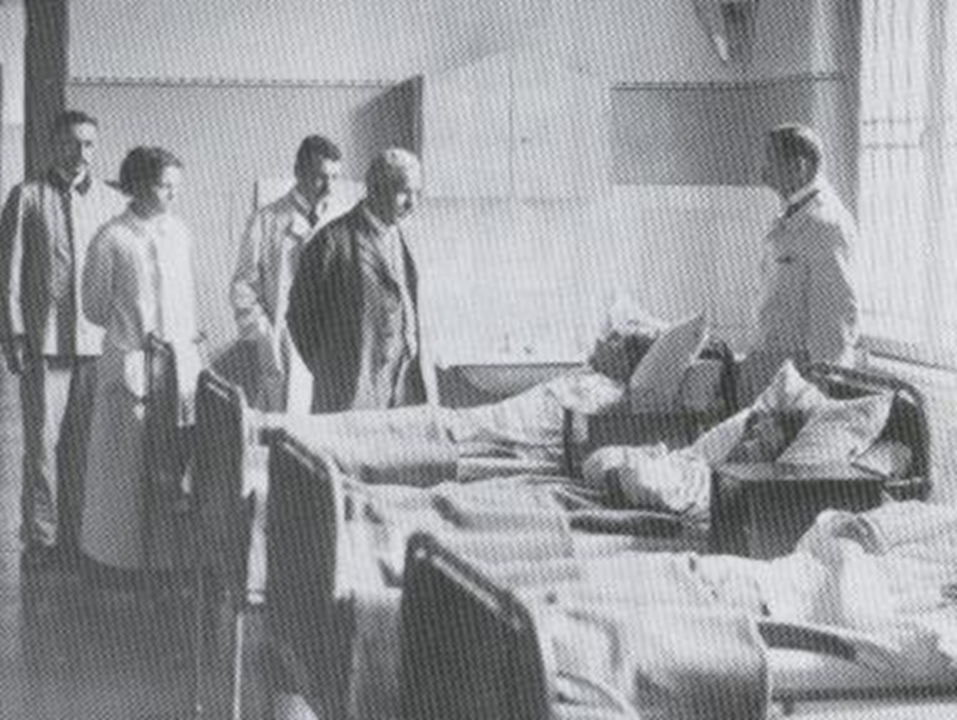
Emil Kraepelin’s famous Textbook created modern psychiatry a hundred and thirty years ago. After the World Wars, Freud’s influence grew and his thinking dominated the US mental health scene after World War II. Nearly 90 years after Kraepelin established his framework, US psychiatry dramatically swept Freud away under the influence of a group of psychiatrists branded as Neo-Kraepelinians. Their arguments for a return to the medical model, and an end to an implicit psychoanalytic assumption that everyone is mentally ill, led to the Neo-Kraepelinian epithet. In 1980, this revolution was embodied in DSM-III, whose later editions, ironically, make it possible for virtually everyone to be viewed as mentally ill. Kraepelin got by on 10 categories, DSM is heading toward 1000.

Psychiatric Drugs Explained was published a decade after DSM-III. Its introduction placed the voice of people taking psychotropic drugs front and central. It asked – could we all think about becoming Kraepelinians? This was not an invitation to become a Neo-Kraepelinian. Instead the call was to do what Kraepelin had been doing before 1896, when he became the Gold Standard Psychiatrist. When along with Wilhelm Wundt and many early psychologists, he created Pharmacopsychology.

Modern psychopharmacology is about where drugs go, what receptors they bind to or neurotransmitter levels they change. If you don’t know what LSD can do to you, showing you where it goes (mostly in the body), binding to serotonin receptors (in the gut) for instance, is going to tell you very little about what to expect when you take it.
Pharmacopsychology is about reporting what we notice on a drug and doing tests to check the effects of the drug on how we are functioning. In the 1880s that meant caffeine, alcohol, cocaine and opioids. Kraepelin and Wundt thought this new science would be an important part of our future.
Pharmacopsychology & Psychopharmacology
In the early 1950s, the discovery of chlorpromazine, the first antipsychotic, appeared to put the future of Pharmacopsychology on solid ground. Chlorpromazine and later imipramine, the first antidepressant, were discovered by noticing the effects they had on people when they had been given for something else.
For a decade after their discovery, the emerging neuroscience was in the hands of behavioural psychologists rather than physiologists or pharmacologists. The science lay in paying heed to the functions chlorpromazine and diazepam and other new drugs affected and the possibility of using these changes to shape behaviour. It was possible to get the right dose of chlorpromazine or haloperidol by comparing the size of a person’s handwriting before and after starting on treatment. It was possible to screen for new antipsychotics and tranquilizers by putting animals on the new drugs and monitoring the effects on their unconditioned and their conditioned reflexes these drugs had on their abilities to learn.
But starting in 1965, the Catecholamine Hypothesis of Depression and Dopamine Hypothesis of Schizophrenia side-lined pharmacopsychologists and brought psychopharmacologists into being. Side-lined our understanding of what these drugs did and how best to use them. These hypotheses gave rise to the idea that if the person was not cured, something biological had not yet been fixed and the answer was to vastly increase treatment doses. It is no surprise that we have made virtually no progress in 60 years.
Our drugs now are replicas of the original antipsychotics and antidepressants – astonishingly given that we can screen thousands per day. The trouble is we put them in test tubes to see what they bind to or what epigenetic effects they have.
Our abilities to use them in a meaningful way have atrophied. Clinical practice has dumbed down. We used to get good responses from haloperidol or flupentixol 1-2 mg per day but ended up giving them in doses over a 1000 mg per day
The Capsule in the Room
The introduction to Psychiatric Drugs Explained spelt out my astonishment at the disappearance of Pharmacopsychology. The book called on everyone taking medicines from healthy volunteers to patients to help restore it.
My astonishment then has given way to complete disbelief now that we cannot explain in plain language to the public or to patients what it is antipsychotics do and how this differs from what tranquilizers do and what these drugs do that differs from what SSRIs and anticonvulsants do. These drugs are all anxiolytic in one sense of another, but they differ dramatically – anyone tested with one of them blind could tell you which it was.

The inscription reads your name may be forgotten but your work remains
Despite being immediately aware of differences between these meds, and despite the fact that so many people are taking them, no-one has been able to put in plain language what the key differences in the experience of taking these drugs are, what people can expect to notice if they take one or another and which of our multiple functions will be changed by them. We should be able to put people in a position to decide if they are getting this or that hoped for effect from a treatment so that they can tell us whether they are getting it or not. We should be able to put people in a position to decide whether what they have been told a treatment is likely to do in order to get them well, which might suit someone else, sounds like the right kind of thing to help them.
Putting people in a position to know what the mission is when taking this pill as opposed to that pill doesn’t just apply to mental health meds. The same holds true for the different kinds of antihypertensives, hypoglycemics, cancer chemotherapies or other drugs along with non-drug options – See Why Depression IS like Diabetes (forthcoming).
Nobody can say No to a treatment we are assured will get us well. But this is saying Yes to a lie. If the prescriber doesn’t know and can’t tell us how a treatment might help improve things, and help us to help improve things, the chances of it actually helping drop dramatically – well below 50:50.
A prescriber like this is locating the magic in the pill rather than in her or him and definitely not in US. S/he is dangerous and you should change prescriber.
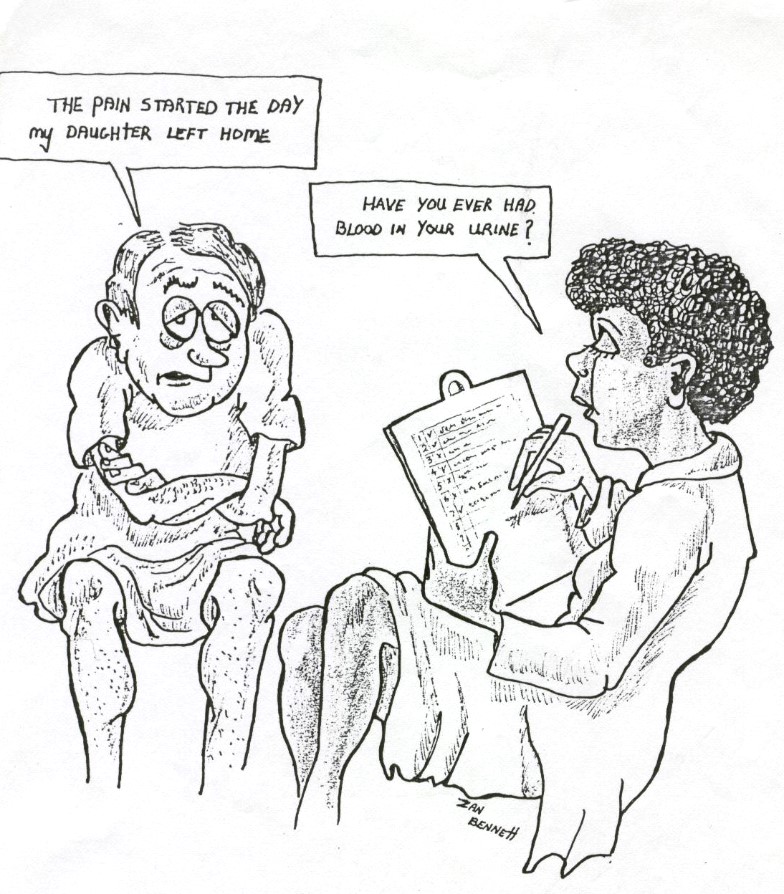
Instead of a solid grounding in what we might expect, we have the appearances of science. Doctors increasingly hiding behind rating scales, blood tests or other measures. The scales or tests generate figures which generate doctors who say this drug will get your figures back to normal – as if by magic without telling us what this drug will do to change the figures.
If we stuff stimulants, benzodiazepines, antipsychotics, SSRIs, drugs with no actions on serotonin, anticholinergics, nicotine, alcohol, microdosed LSD or mushrooms into clinical trials for nervous disorders, all can change rating scale scores to exactly the same extent. In the case of nicotine and alcohol, however, we know exactly what they can do to us and when that effect might be useful for us. We also know their hazards, but doctors can’t tell us a thing about what scientifically researched prescription meds specifically do.

E Pluribus Mediocris – as this doctored Great Seal of the United States says. Mediocris is Latin for Average. Clinical Trials are averaging machines – putting a pig, cow, horse or man through a mince meat grinder would produce a comparably similar outcome without us being able to tell one from the other.
Companies earn billions of dollars from these drugs every year but we who take them are none the wiser about how this drug as opposed to that drug might help us. Our job is to just take them, without contributing from the position of a privileged observer on the question of whether the treatment is helping or not or what exactly it is doing. This is a recipe for a doctor stubbornly sticking to the wrong treatment for us and perhaps doubling or tripling the dose in order to force ‘our’ figures to behave themselves.
Listening to us instead would be a recipe for changing this pill to a different treatment approach not just switch one SSRI for another – Most of the patients in the original Teicher group who became suicidal on Prozac, got better when switched to an MAOI.
Practicing What?

Bruce Springsteen in Born to Run gives better descriptions of akathisia, one of the most serious hazards of our meds, than any medical account has given since the 1950s when drug-induced akathisia was first described. See I Come to Praise SSRIs for the description. Most of our meds give rise to Akathisia, but here again we seem unable to pinpoint the differences between antipsychotic akathisia, SSRI akathisia and anticonvulsant akathisia.
Our 70 year fixation on dopamine and serotonin has shed no light on akathisia. We know antipsychotic akathisia can be pretty instant and can lead very quickly to suicide or homicide. SSRI akathisia seems to have a slower onset and suicidal trajectory. Mirtazapine akathisia seems to have the same timeframe as SSRI akathisia, but it differs – we don’t know how – from SSRI akathisia. Ditto Anticonvulsants. These are just as likely to lead to suicidality as SSRIs but over a much slower timeframe – giving us a much better chance to spot warning signs, except we have almost no sense what to look for or ask people about.
Shouldn’t it be possible to get us and our psychiatrists and psychologists to share insights on these issues. The more people who have a sense of what might be going on, the better the chances we can save lives. Doctors and psychotherapists knew far more 60 years than they do now. Their combined observations back then led to the creation of SSRIs.
A psychotherapist seeing a patient today might spot changes in their patient after being put on a drug but will generally not explore this with the patient for fear of an email turning up from a belligerent doctor telling them they are not licensed to practice medicine.
Whatever about practicing medicine, doctors who are not open to reports on medication – induced observables are not practicing science – See Narcissistic Doctor Disorder.
Material Me, Material Us
Behavioral pharmacology didn’t disappear entirely. It survived in an abuse colony few doctors ever want to visit – substance use disorders – where motivation is the big story.
Motivation sounds very personality or character based. Our appetites, however, the prototype of our motivations are body based rather than brain based. Prompts from our circadian clock nudge us to imagine food and seek it out or to imagine sleep. Feeling chilly prompts heat-seeking behavior. Being driven by internal sensory signals like this led to a recognition of the importance of interoception – the ability to notice cues in a manner that enables us to manage them – See Intrepid Interoceptors Needed.
Homeostasis, the process of balancing our internal milieu, operates largely through small sensory nerves, which lay the basis for a Material Me, and the basis for a Material Us – many of our hormones readjust in the presence of others.
We have typically translated all this into a brain based biobabble about ‘Dopamine Hits’, almost all of which is badly wrong. ‘Dopamine hits’ crop up in conversations about sex addiction or shopping addiction, as though our original sin was The Dopes need Hits.
The capacity of SSRIs to cause alcohol use disorder (AUD) helps illustrate the extent to which invoking dopamine side-steps the kind of work that needs doing. Work? Yep – talking to people. Asking questions.
Even though the ability of SSRIs to cause AUD has been firmly on the radar for nearly a decade, we don’t know why or how SSRIs lead to AUD. Nerds have looked at serotonin transporter genes to explain it, rather than ask people. When you talk to people who have the problem, they offer several different explanations, each of which may be hold true for some of us but not for the rest of us.
- When on an SSRI, or suffering from post SSRI sensory numbing, some folk claim not to be able to get drunk. They do end up blacking out so they do get drunk. Not being able to get drunk appears to mean they do not experience the sensory cues linked to becoming drunk. Giving a S-3 receptor antagonist can restore sensitivity to these cues. This muting is consistent with the core actions of SSRIs – I Come to Praise SSRIs.
- Other folk, including medical doctors acting as healthy volunteers, have taken alcohol to subdue the akathisia or restlessness that psychotropic drugs can cause. Alcohol is one of the very best treatments for some forms of akathisia, possibly because it has diuretic properties which counteract the fluid producing effect of SSRIs, which is one candidate for a possible cause of akathisia. This happens because SSRIs are carbonic anhydrase activators leading to fluid production in confined spaces where it should not be giving rise to an abnormal irritating sensation. See Psychiatric Drugs Explained.
- Finally, another experience is more manic or closer to the traditional account of AUD disorder – I knew I didn’t want to do this, but it was there and I couldn’t stop. This echoes a ‘hypnotic’ effect SSRIs can have. When sensory muting reduces the flow of images to our brain, we are more vulnerable to one image becoming dominant and in control of our behavior.
There may be more SSRI effects that people with SSRI linked AUD can point to, but we aren’t going to know what these are unless we ask questions. At present we just lump everyone with an SSRI-linked AUD together and expect to find something in the genetics. This is not a recipe for finding something that may be there.
Sensory Power
It’s time to reinvent Pharmacopsychology.
Gen Z or Millennials, able to access SSRIs from online platforms like Hims and Hers, and uninhibited by prescribing doctors from noticing and sharing what these meds are doing to them are in a great position put this on the map. Hundreds of millions of older folk, scared by their doctors, and not feeling entitled to research these drugs even though they are or have been in a positive of privilege to observe their effects, have been unable to do so.
Starting on very low doses will give the clearest signals. Sharing experiences is key but you have to bear in mind the differences among us. Women may be hypersexual pre-menstrually or hyposexual or just normal. If a variation like this can happen on our normal hormones, even greater variation can be expected with an explosive thrown into the mix. It will take skill to map out what the drugs are doing. Given our brain bias, it will take great skill to notice all the bodily changes from smell to subtle visual effects that we have spent 30 years ignoring.
Emil Kraepelin and the early pharmacopsychologists would have died for drugs like the SSRIs. Through their effects on our sensory systems, SSRIs are extraordinary tools to explore our emotions (feelings) and subjectivity – even more than the psychedelics.
The science made possible by SSRIs needs doing has not been done.
Doctors are too hidebound by paperwork and scared by bureaucrats as well as just not curious about anything their prescribees might do or think or say, so the science won’t be done by them. Millions of older folk are too scared of their doctors to say boo, so the science won’t be done by them either. Governments are too rattled by pharmaceutical companies threatening to move their operations out of ‘your’ country, so they won’t support it. Lawyers have advised medical journals that having anything to do with pharmacopsychology risks getting sued by drug companies.
It’s going to take a new and intrepid generation of explorers to open this Pandora’s box and let us see what is in there. Time for Sensory Power to Flower.
This post links to to
Thank you
Hard-hitting and thought-provoking blog.
You mention Homeostasis only briefly.
Perhaps it should be given far greater prominence?
Hugh Mann – physician – Health & Homeostasis – put it succinctly:
https://www.bmj.com/content/356/bmj.j1168/rr-0
And perhaps the emphasis needs to be on PharmacoPhysiology?
My own background is in physiology – later becoming a practising psychotherapist. I became horrified at what I was seeing happening – people’s physical and psychological health becoming wrecked by prescribed ‘safe and effective’ [sic] ‘antidepressant’ [sic] medications. One you see it you can’t unsee it.
Marion
Thanks for this. Of course you are right – homeostasis should be in there as well as in the previous post on Praising SSRIs. This goes to a basic even primal point – any organism right from the very start has a ‘motivation’ to keep things in balance or else it goes out of existence.
A lot of what the Praising SSRIs and Interoception post on RxISK are trying to do is to bring home the point that knowledge is embedded in our physiological systems. Keeping psychology as a word to capture this seems important to me. We are treading a fine line between biobabble and psychobabble.
Circadian rhythms on which I spend a decade working a long time ago are another step up from homeostasis and again have motivation built in the whole way. We can easily see/appreciate our motivation to eat, sleep etc but again this is driven by our physiology rather than the other way around.
The challenge is to get people taking something like an SSRI – the same argument can be built for antipsychotics – to train their senses to detect the impact of these meds in low doses on these processes that underpin so much of who we are – ideally putting the person taking the med in control of what is unavoidably an experiment – that as things stand too often goes badly wrong
David
Thank you David
I guess the challenge is that homeostasis is all happening unconsciously.
Before any ‘psychological’ involvement or awareness.
Can we train’ our conscious minds to interpret at an early enough stage?
I wrote this some years ago:
https://welldoing.org/article/perils-visiting-your-gp
When the unconscious system is picking up internal danger signals +++ this could perhaps be a clue to Akathisia? When the person affected feels utterly compelled to escape – from their own unliveable body?
Marion
Marion
Marion
There is a real challenge here – just because things are unconscious doesn’t mean they can’t be observed. If I am trying to balance, and get emotional, my body directs blood to muscles that may be called into action and this disturbs my balance. I can spot the loss of balance but not the fact that is is produced by changes in blood flow.
So some of what we are dealing with is very very obvious even though unconscious, the challenge is encourage US as a collective to interocept – especially in response to meds like SSRIs. It’s almost a reverse Buddhism – the idea is not to empty the mind but become familiar with the flickering flame and then just as you can change the picture by disturbing the first that gives rise to the flame with a poker – so too we have an SSRI poker or LSD poker which used in micro-doses might help us get some sense as to what our mysterious bodies are doing or are capable of doing
Re akathisia – I’ve puzzled about this for 35 years or more. I think finding that many drugs – not just SSRIs are carbonic anhydrase activators and this leads to fluid build up in places it should not be. Fluid build-up in say the confined space between bone and its periosteum or in-between layers of skin will produce sensations that they brain does not recognize and is not used to interpreting and likely to get wrong. SSRIs may additionally contribute to these new sensations dominating our attention because the SSRIs are at the same time muting other sensory input that would have otherwise help gate control the new sensation and make it less salient
Standing in the way of all this are pharmaceutical companies who 40 years ago still recognised that the adverse effects of drug – Viagra and erections – were the best way to discover new drugs but have now discovered they can make much more money from just controlling the conversation about drugs to only focus on the benefits.
And standing in the way are narcissistically disordered doctors who lack basis curiosity about what the people they put on drugs might be experiencing
It’s a steep hill to climb
David
When I first went onto an ssri antidepressant which was Seroxat the first couple of months I didn’t want to drink. I didn’t have any cravings that I recall. It was about 2/3 months after starting I became more energetic and wanting to go out socialising. I started drinking at home first and found after about 2/3 drinks I would just blackout and fall into a comatose sleep. My friends would say “you only had two drinks you can’t be drunk”. This happened every time I had a drink at first. I didn’t know what to make of it.
Several months later I begun developing a tolerance and my drinking and cravings begun to increase but now I was having black outs after 2/3 drinks but still physically functioning. I would have no memory or very little memory of what I had said or done.
The cravings and increase in consumption got worse as time went on and I also recall feeling quite anxious and restless along with a strong craving for white wine. It begun to control me to the point I couldn’t stop. I was in a vicious cycle that kept repeating its self over and over again and it was getting worse.
I noticed when I took the Seroxat in the morning the effect was like having 2 glasses of wine then by the late afternoon I started to get very anxious and restless and crave a glass of wine to the point I was fighting off the urge to drink only to eventually give in the cravings.
I noticed when I was drinking, I wanted to drink more and more and more to the point I was drinking 2/3 bottles of white wine before collapsing into a coma.
The worst time was the first few days I was withdrawing off of Citalopram; It was like my last blast of cravings before they dropped dramatically. They were extremely strong cravings, strongest ive ever experienced. Within 24 hours I had drunk 1litre box of white wine, 1 bottle of white wine, 1 litre of amaretto and 4 cans of larger. The following day I felt like I was actually dying. I was hunched up on my bed with an intense anxiety so strong I thought I was going to have a heart attack. I felt my heart pounding really fast like it was struggling to survive. I was so tired at the same time and just wanted to sleep but my body was too tense. It took about 12 hours to get out of this state and eventually fall asleep. That was the last time I recall having over powering ssri (withdrawal) induced alcohol cravings.
Then the cravings just dropped dramatically by about 50% the more I withdrew from the SSRI’s. The cravings were dropping quickly I couldn’t believe it. This is what made me really realise it was the SSRIs all along causing my intense cravings. I struggled after a few months in SSRI withdrawal though so I was then given Mirtazapine and that is when the last remaining percentage of cravings totally vanished.
Anne-Marie
We need many more reports like this from people who have been through what you have been through to see can we get some insights on what is going on that we can share with others who are about to start these meds.
Another big question is how much light can reports like yours shed on ‘natural alcoholism’.
D
The cravings started at around the same time as the anxious restlessness, I’m thinking they’re connected. You are not aware of this at the time you are also feeling detachment and emotional numbness along with many other side effects. Your swamped with so many side effects its hard to recognise them all at first. It’s only looking back you start to unpick it all that you start to see it all.
We need descriptions like this from you afterwards to be able to put in front of people when they are having the problem and see whether this helps them help us to understand better
D
Agreed. Everyone, please keep documenting your experiences. Critical Psychiatry needs to make the mainstream news. It’s literally a Public Health Crisis.
I live in Vancouver, Canada.
Similarly, Fraser Health literally killed someone on Sat, Nov 22, 2025 due to a Mis-Dx. It wasn’t in Zone #5 (Psychiatric). The family created/wrote a PR document & called/emailed all of the news networks. They probably told the camera crew that there was plenty of avaliable parking. Global BC picked it up. It was the top-story on the 6pm Tues, Nov 25, 2025 hour.
You just know that Fraser Health’s legal department was in meetings all evening and all early morning before the 5:30 A.M. news hour started.
The Langley mayor’s daughter suicided after the Langley MH & SU unit closed their doors in her face when they closed at 4:30pm for the day. She was found dead in bed snuggling a teddy bear the next morning.
Latuda (80 mg? I’d have to check My Health Gateway) made me want to drink. It was so strong. I don’t drink alcohol Ever. I reported it months later, after getting off of it, and the Psychiatrist I reported it to didn’t believe me, nor believed me about any “adverse effects” from these legal Psychotropic drugs.
He medically gas-lit me. I don’t know what’s more unethical. Medical gas-lighting or my person being iatrogenically-harmed by Psychotropic Pharmaceuticals.
He has a lot of growing up to do if he wants to remain a Psychiatrist to pay his mortgage. If he ever realizes that I wasn’t lying, his inner child will tell him to GFTO of Psychiatry.
Exactly the same as me, 14 years on Citralopram, intense craving for white wine, 2 bottles each eve, but craving wasnt first thing in morning (as I guess it would be for an alcoholic) it was intense restlessness and “wanting something to calm it”(now know akathisia, thanks to David Healy video “Hearts and minds, psychotropic drugs”,,,, it was a “no idea what to do to help myself calm” …the only thing that took the edge off was wine. I even did hypnosis and didnt work . This type of hypno has been incredible for various things since so I know it works, but not on Citralopram. I was also smoking alot, couldnt stop, even when pregnant. I would cry daily saying I hated drinking and smoking, but couldnt stop. …..within days of stopping Citalopram the craving for wine went (can drink now when I want but I choose, I dont NEED as I did, and I stopped smoking! Then put on Elvanse for misdiagnosed ADHD (was akathisia) 2 years later and it started again! the more severe the aka the more severe smoking and alcohol cravings, also the worse emotional blunting got. It makes me sick to know I did this, but now know it wasnt my choice. I and my poor babies didnt ask for this, I was /am a good Mum, and now realise that this was no way a choice for me, it was survival to put a slight rest to akathisia
‘Mirtazapine akathisia seems to have the same timeframe as SSRI akathisia, but it differs – we don’t know how -from SSRI akathisia’.
From the SSRI / AD induced AKATHISIA destruction of our loved one’s life, several observations:
SSRI first episode of akathisic, tormented writhing restlessness with overwhelming AGITATION, and no means to convey to her family what was happening to her – this was more gradual in onset.
After de-challenge (from citalopram) – then re-challenge (with Sertraline) – acute – very rapid onset of more intense akathisia. (Misdiagnosed by an arrogant and incompetent – unneeded psychiatrist as “psychotic depression”).
After de-challenge and re-challenge with mirtazapine: – rapid onset of akathisia of similar intensity to citalopram.
One major difference with Mirtazapine – almost immediate repeated sobs and extreme distress : –
“Dad – I’m loosing my memory”. — (Terror) — “How can I live without a memory”?
Repeated and repeated with ever increasing anguish.
Truly heart breaking prescriber-ignorance-induced unbearable suffering.
This is the human price of KOLs hiding and covering up SSRI/AD induced AKATHISIA.
This is the price of SSRI propaganda and promotion by KOLS and The dual Royal College’s ‘Defeat Depression’ Campaign.
Decades of Medical Practice and training, yet awareness of AKATHISIA had been hidden from me until it was too late to recognise and make my own daughter safe.
Time for Sensory Power to Flower.
Doctors and Observables, would not notice if it smacked them in the face
SSRI akathisia?
Under threat?
The Pharmacopsychology Phandango
I was off Seroxat for 6/7weeks and became increasingly unwell. My heart was racing, an agitation was rising, I felt disembodied from my body. This was after cold-turkey. I restarted Seroxat myself as I got to the point of ‘unbearable’. I did not consult my doctor doing this, as she had been pretty useless so far. So after a few days, I was imploring her to send me to a hospital, and she sent me to a mental hospital with no information to anyone. So no one knew at the mental hospital what she had done and it was six days later the psychiatrist who had recommended Seroxat came in for a chat. He did not prescribe Diazepam, it was me who asked the pill-nurse for it, so a few days later l went home without Diazepam.
Almost ten minutes in to my drive home, the suicidal ideation urges started. I had no thoughts other than how to end my life on this 40-minute journey. I stood in our sitting room like a ghost. Staring at my partner and little daughter. It was only drinking some wine, that I could manage to speak at all.
Then I woke up very early and leapt out of bed and turned on the gas in the oven, I got a hose and shoved it in the car exhaust, I grabbed a large kitchen knife, I made a noose in the garage, I swallowed 28 beta-blockers. In the general hospital, I found the large plastic bag in the bin in the toilet on my ward.
When I pleaded with a doctor on duty, later that night to get me Seroxat, I was well enough to describe everything to the Registrar the next day. He sent his report to my doctor’s surgery, not copying the psychiatrist, where it was stuffed in to my dishevelled medical records. My lawyer, said she had never seen such a mess as my medical records and it took her and her paralegal all day to get things in to date order.
This was a complete dogs’ dinner. We can only despair at dumb doctors. Not so dumb, when they start needling and being thoroughly unpleasant, off the record. From the moment of restarting Seroxat, the ensuing manic episodes, there was not a thought in my head that contained any reality. The ignorant psychiatrist upped the dose of Seroxat to 40 mg. I then started my year-long withdrawal from 40 mg. down to 30 mg. and then Paroxetine liquid. Bedridden for a few months after this, and then I climbed out of it. I was finished with my doctor who brought me Prozac.
I can totally attest to the fact that my body took over with my manic reactions. The shock of realising me, I, myself, lost itself completely, is the shock that rocked me to my core.
After Tim’s insights, Born to Run, it really should not be like this. It is Pholly.
As science evolves, it is astonishing, that we have these stories. I hope any doctors reading these uniquely powerful insights, reflect on all this and might admit to learning and gaining at least some curiosity on how they can become better doctors. Not just slavishly being manipulated in to oblivion.
They could look in to akathisia 1,2,3, as their starter for 10.
Or will they go on mugging their patients.
Evgeny Legedin – who, for anyone who doesn’t know, was driven out of Putin’s Russia for leading an anti-government youth human rights’ organisation – and nearly driven out of UK psychiatry for daring to question the orthodoxy – just posted this on X:
“In depression some of these neurotransmitter systems don’t seem to be working properly. Antidepressants work by increasing the activity/levels of these chemicals in our brains.” These words appear verbatim in the University of Glasgow’s “Psychiatry Revision Guide” – in an OSCE example script a medical student showed me.. It’s the classic “chemical imbalance” explanation that generations of doctors have memorised for exams and repeated to patients. For years, it was presented as established fact. But the evidence has moved on. ‘
I sent him this piece. A cultured man with a curious mind, he might just be one of the new generation of intrepid explorers open to embracing your Pharmacopsychology revolution.
As for the old guard – hmm – I’m beginning to think Narcissistic Doctor Disorder may be too generous. Heaven’s Gate – members known collectively as ‘The Class’ – feels a bit closer– a classic example of how a bizarre belief system can override educated sense. Quite honestly is there much difference between all the brain obsessed biobabble – and imagining that a spacecraft trailing the Hale-Bopp comet is coming to pick up believers?
Listening to Annie and Anne-Marie describe in such vivid detail how these drugs affected them – or Tim his loved one’s awful experiences – is shocking. But it should also have been educational for their prescribers. It clearly wasn’t.
I was talking to Sam Hall today, in grim withdrawal himself as well as a moderator of a big support group . He was saying how many older people have joined the group, having finally worked out, thanks to recent publicity, that they don’t ‘have’ ‘treatment resistant depression’, bipolar disorder, FND etc. etc.– but they’ve lost 40-50 years to iagtrogenesus and ‘The Class’.
You write:
‘My astonishment then has given way to complete disbelief now that we cannot explain in plain language to the public or to patients what it is antipsychotics do and how this differs from what tranquilizers do and what and what these drugs do that differs from what SSRIs and anticonvulsants do.’
Well you can – I read Psychiatric Drugs Explained as a layperson and it was crystal clear to me. But most doctors seem to have no idea – it’s not in their education – judging by GlasIow University’s revision guide.
One idea that crossed my mind was to produce simple material for patients, peer support etc. – and any proven intrepids. Maybe a basic set of Rxisk infographics explaining how psychotropic drugs actually work. I’m imagining a graphic of the body and its sensory systems. There could be sheets to print out of the same graphic that people use to record how they feel the pill they are taking is affecting the essential part of the equation overshadowed by the brain fixation – their bodily systems.
Quite possibly late night lunacy – but there might be the seed of an idea here.
Further thoughts-even later night.
I was thinking a rxisk guide to how psychotropics work and affect us -could be turned into an app for TikTokettes. Tracking
how the various sensory systems are affected-
rather like apps that track ovulation or whatever..
In fact this could be a self-monitoring product well suited to OTC sales.
That’s a very great idea Harriet.
More research into genuinely slow, hyperbolic tapering could help even more people stop antidepressants safely and with fewer withdrawal effects. (15/n)’
https://x.com/markhoro/status/1998909263348117820
The Once and Future Pharmacopsychology
“It’s a Long Way to Tipperary”
If the whole mechanism of ‘sensory affects’ is not understood with SSRIs, then the whole edifice of SSRIs, comes crumbling down.
The recent Lancet article on withdrawal looks like a great example of researchers being mesmerised by figures without thinking about what is going on
it’s difficult to credit anyone interested in research engaging in an exercise like this or any medical journal publishing it
D
I wish every practitioner who ever prescribed these drugs to me would read this and apologize, or at least LEARN something.
“Alcohol is one of the very best treatments for some forms of akathisia, possibly because it has diuretic properties which counteract the fluid producing effect of SSRIs, which is one candidate for a possible cause of akathisia. This happens because SSRIs are carbonic anhydrase activators leading to fluid production in confined spaces where it should not be giving rise to an abnormal irritating sensation. ”
I think this is profoundly important.
One molecule of carbonic anhydrase can catalyze a million substrate molecules in one second. It’s incredibly fast so the body needs to be in control of it. It’s not difficult to see how quick it could get out of control.
This is very interesting Chris I never considered this and your explanation does make a lot of sense. It also makes sense the restlessness and urge to reach for alcohol to calm down. I dont crave alcohol anymore or suffer restlessness since coming off ssris. I never considered the two things to be connected. It’s starting to make a lot more sense to me now.
The only thing though I became more restless while drinking on the ssri not less. I did however on one occasion whilst drinking on seroxat experience urine retention. I was busting to go to the toilet but couldn’t go. It took about 4 hours I think before I was finally able too. I always wondered why that happened but it was only a one of so didn’t worry about it anymore but looking at this possibility maybe the reason behind that as well.
I also noticed while on seroxat and on a flight my ankles became very swollen and I ended up with water blisters on landing. I was only in my 30’s so don’t know what that was about but have never experienced that again either. Maybe something to do with seroxat and fluid build up and the flight.
There was a comment here which mentioned meditation which can be among the most helpful things for interoception and pharmacopsychology but then drifted off into Buddhist in-speak which is not so helpful.
Following the response below the author of comment wanted it removed.
Your observation about being able to observe better after starting meditation is good to get and interesting. Meditation practices and interoception might well work together but they aren’t the same thing. Interoception stops with recognizing or being able to observe sensations.
Observations like swollen ankles on planes when on SSRIs are great to get. Mention them to someone and they will often say something like when I used to get sick with something I’d feel less numb. This also fits with going up mountains to the point where altitude sickness kicks in and lots of people report that SSRIs stop working – stop numbing you.
The balance problems on SSRIs also fit with people reporting more motion sickness while on an SSRI.
Collecting observations like these is key. The trick then is to agree on a mechanism that might tie them together. Talking about dampness risks being Buddhist-babble – like low serotonin biobabble – a loose something that might sound good but cannot be linked to real things like the misplaced fluid in oedema or to real serotonin levels.
Unfortunately the word autism these days is clouded in babble and has become close to useless. There is a real autism just like there is a real serotonin but what we have today has nothing to do with the real autism.
Back in the flower power days of the 1960s, there was a West Coast saying – if you meet the Buddha on the road, kill him. That’s partly what needs doing now. We need to kill off a lot of the babble that gets in the way of us recognizing what is happening to us and sharing it with others.
D
I also had a constant whooshing sound in my ears on paroxetine and once had a very bad vertigo attack and my legs and arms went limp and heavy and i couldn’t walk properly like I’d had a stroke or something. It was very scary I called out a doctor who gave me Stemetal and I couldn’t move or I would have been sick.it eventually went. It was due to the vertigo attack.