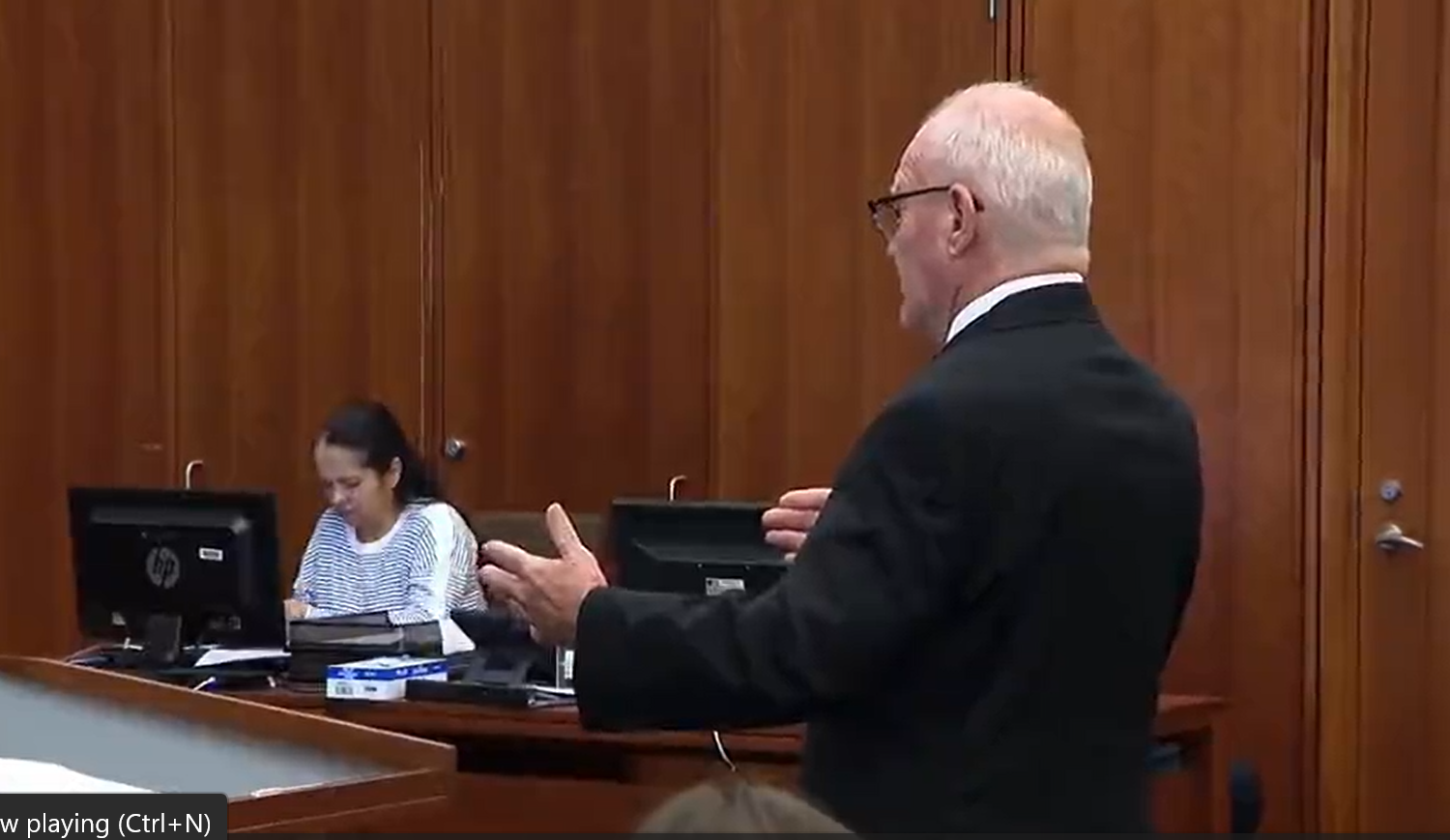
At the most recent hearing in the Clancy case, Lindsay Clancy’s lawyer Kevin Reddington said the following:
When you consider the evidence that the government has, you have the exercise bands, you have the woefully deficient DNA, you have the woefully deficient fingerprinting, you have the horrific, ridiculous investigation using the term loosely by the police. There was no investigation. It was not even a horrendous investigation- there was no investigation. This entire case is based on speculation. Where is the admission? Where does she say that she did this? And what’s most chilling is the fact that when she comes out of this obvious coma that she is in, that when she comes out of it- your honor heard the testimony from the psychiatrist and from the doctors of Brigham Women’s Hospital, she was told what happened. She has no memory of what happened. Why does she recall cutting the screen. Why does she recall killing the children where she’s told what happened and had no memory. There’s no evidence that she admitted that she did this.
Reddington’s ‘show’ about a horrendous non-investigation was done with a legal purpose. He’s playing a game with the prosecution and the judge – or putting them on notice. Likely no one believes Lindsay Clancy didn’t kill her children, not even her lawyer. It’s almost impossible to see any other way they died. The police likely figured this was an open-and-shut case. Being castigated like this, however, may make the police more thorough the next time around.
The irony here is that in the broad light of day Kevin Reddington is actually missing another set of non-investigations linked to the Clancy case, that won’t lead to investigators being more careful in future because it has become a routine part of their investigative job not to investigate – not to ask questions or check details.
The medical evidence in the Clancy case was not, and in the vast majority of other clinical cases is not investigated, not even horrendously investigated. It’s missing. This missingness seriously impedes Lindsay Clancy’s possibilities of getting a fair trial and Kevin Reddington’s ability to mount an accurate and decent defense.
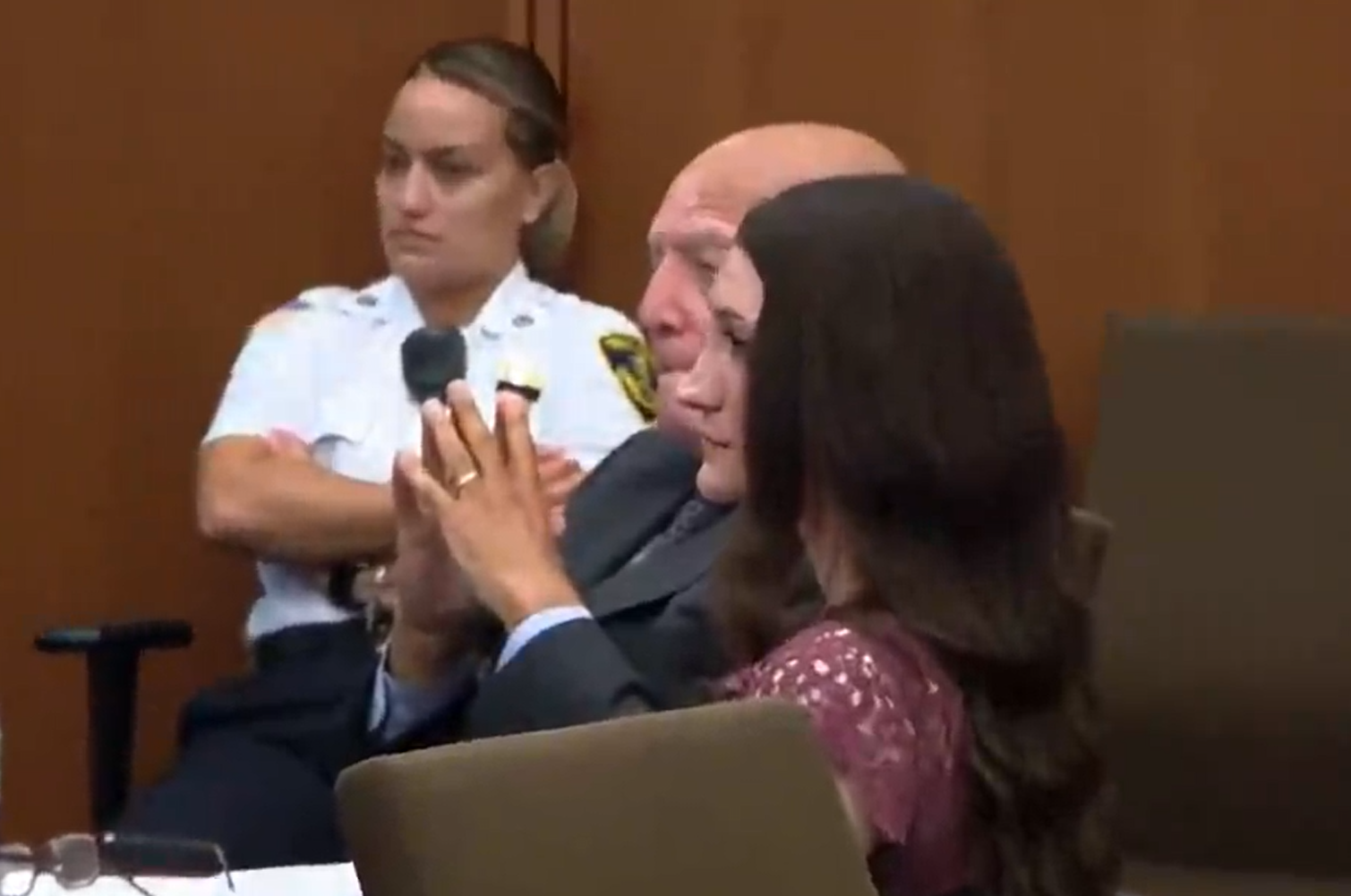
Lindsay Clancy’s case is not unique. Deirdre Morley and Marilyn Lemak, who also killed three children, have been denied justice on this very basis. See The Eclipse of Science and of US and Damnation or Salvation.
In Deirdre Morley’s case as in Lindsay Clancy’s, while there is lots of evidence of drugs started, and doses increased, and then abrupt stops and switches to other drugs, there appears to be nothing in either woman’s records that points to any evidence of any effects of these drugs on either woman. Nothing has been established or ruled out – there are no hints of an investigation.
Our evidence that the medicines either woman had might have been having significantly bad effects on them comes from Clancy’s text messages and what we know of conversations she had with her husband and family and Morley’s family who were discussing these matters amongst themselves as they were very aware that treatment was not helping her.
Such is the neglect of input from the person at the heart of care on one side and at the heart of a legal case on the other that there is something of an impression that text messages of a drug not suiting the person are read as instances of or pretty well as evidence of a psychosis with family observations that the drugs were not suiting read as evidence of a folie a deux and not worth exploring on that basis. The only views that count are the experts’ views – experts who seem to know nothing about the effects of medicines.
This is important as these medicines are a likelier cause of Command Hallucinations or whatever other Command phenomena one or other or all 3 of the women may have had than any post-partum psychosis is, or inclination toward altruistic homicides, or sudden appearance of Martians – Drug Induced Loss of Capacity.
This is important because the medications of all 3 women are a more likely cause of suicidality and homicidality than any misdiagnosis – calling a state depression when it should have been a bipolar disorder – the treatments for bipolar disorder come with even higher rates of suicidal effects than antidepressants do.
Nothing To See Here
The Clancy case is not an isolated horrendous investigation. It is par for the clinical course. Pretty well anyone who attempts to introduce treatment induced problems from suicidality or homicidality to sexual dysfunction or hallucinations into a conversation with a healthcare professional is likely. these days, to simply have a diagnosis of depression or psychosis confirmed in their records along with mention of a drug being started or added to the mix or dose increased – or decreased abruptly.
The rubber hits the road in legal cases. I routinely get asked to give medical input to a legal case with the lawyers offering to send the medical records along to me. The expectation appears to be that a report can be done based on the record – all the relevant information will be there. The lawyers often explicitly ask for what they call a Desktop Report. I assume this sounds clean and efficient to them and of course is more likely to land experts for the defense and the prosecution on the same page and leave lawyers able to focus on the dots on an i or cross on a t, rather than grappling with what might have happened.
I tell them don’t bother – I need to interview the person. After that, if I think there is a case that the drug played a part and abolished intent, I’ll be able to look at the records in order to see what’s been missed and how to manage the missingness.
If there’s been any other expert reports, I might say let me see these – but not because I expect these experts to have homed in on the effects of the drugs. They’ll have laid out the broad clinical history but are unlikely to have noted anything useful about the drug effects on the person in question.
If you came from Mars, you’d draw the conclusion these drugs don’t have effects other than magically getting someone well some, possibly 6, weeks later. There is no possibility of a toxic effect. If recovery has not taken place, it’s because an extra eye of newt or toe of frog should have been thrown into the mix and wasn’t – this might offer grounds for a negligence case against one or other of the clinicians.

Just in case you’re wondering – there is a specially made slide just above this line, filling the space between here and the line above. The space is not blank – the slide is.
The phrase – “Move along, Nothing to see Here” – has become a humorous item. It translates into – you are not allowed to look at this scene because you might spot what has gone wrong and we don’t want you to do that.
But in a medical case like the Clancy case, it can be taken literally. As regards the key and pertinent details of a medicine’s effects on you or me, our medical records are effectively a blank piece of paper.
Justice and Healthcare
Justice and healthcare go hand in hand
If you can’t win a Not Guilty by Reason of Toxicity case you can’t get good healthcare. There is no incentive for your physicians to get things right – especially if what’s right differs from the guidelines/standards of care If it’s mental healthcare, what your physician has done may accidentally and occasionally turn out okay but this will be down to luck rather than their expertise.
And if you aren’t getting good healthcare. you can’t win a Not Guilty by Reason of Toxicity case – blank pieces of paper won’t help persuade a jury that the drug harming you.
Jurors want to know why, given that so many millions of others do well on these drugs (this is a different question), you should be the exception and do poorly.
As F Scott Fitzgerald said:
It is the sign of a sophisticated mind to be able to keep two contradictory things in mind at the same time and still function.
Whatever about poor sods like the rest of us you’d expect experts to be sophisticated. But the critics of psychiatry only figure the meds don’t work and can’t do good. The critics have abstract and global positions on the drugs and treatment – when what is needed is a position on the effects of a drug on you or me from someone capable of saying that no the drug has not caused the problem in this case.
Even the patients who have been harmed tend to have a more sophisticated view than the critics. Like those injured by vaccines, whose injuries are denied, the injured recognize they only took the treatment, even volunteered for the vaccine trials, because they believed in vaccines.
The experts on the pro-drug side are not sophisticated either. They figure the meds work and cannot harm. If you got worse it just shows your illness was more malignant than we thought and you should have been on much higher doses – which might open the door to a negligence action against your physician.
We need a middle option. Most of the public, if forced to take one option only are likely to default for the meds work option. We believe in them because a majority of published opinion mentions they work just like it mentions there is a state called Massachusetts on the East Coast of a place called North America.
You can see more of Kevin Reddington’s pitch here.
The rubber hits the road in legal cases.
When I met the doctors, with their hostility, nastiness, and medications, it became clear, I was out of my depth and their treatment was designed to kill me. Cold, and insinuating I was flawed, they didn’t behave as I would have expected. Many, many people do not behave as expected. With the medications, people not behaving as expected, have created the death-trap, heaped upon us.
A non-medical lawyer in Glasgow accepted me as a client. She was horrified that I felt I was nearly killed by my doctors who would rather see me ostracised from society, losing precious friendships, the demise of my family life, the unrelenting challenge of rebuilding a life so casually almost taken.
The years long litigation against GSK about Paroxetine. Lost by a Judge, who was equally uninformed about this drug. The $3 billion fine for GSK by the US Department of Justice, with Paroxetine. The law firm in the US, and all their cases with Paxil – suicide, homicide, and violence.
So much evidence, against most classes of antidepressants.
Lindsay took Zoloft as the first drug of choice, followed by 12 others. She had no chance of fighting off Zoloft toxicity when it was interfered with by all the other drugs. She was quite aware of drug toxicity, her family were aware of drug toxicity.
Reddington was aware of drug toxicity. Unfortunately, for Lindsay, he did not provide an Expert to explain drug toxicity.
Horrendous Investigations, neatly provided.
From every angle: – The tragedy of the children, their family, and watching the televised court proceedings against Lindsay Clancy, this is truly heart breaking.
Especially so for those of us who have seen, experienced and lived with the involuntary toxicity, and
life-changing, quality-of-life terminating, and multiple systems injuries in those who (on trust) took unnecessary psychotropic drugs for mis-diagnosed, none-existent ‘MH Labels’.
Surely the cases referred to above cry out for expert defence evidence of involuntary toxicity?
Surely, without this, we can only expect Law with No Justice?
The lack of appetite for investigation is what is strange to me. I should be motivated by concern but I’m ashamed to say, at times I think curiosity is my strongest motivator, I want to solve the riddles.
Curiosity is not welcome in the current climate – strikingly so.
D
As you know, I recognise the dimensions of the cultural and political blockade that drives this horrendous non-investigation of the medical evidence in these cases.
But, as a sensible human being, I still find it impossible to grasp how anyone can overlook such blatantly obvious evidence of toxic drug reactions as those described by, as an example, Lindsay Clancy in phone notes – and messages to her providers:
“That exact night I went from 25 to 50 milligrams (Zoloft). I didn’t sleep for 48 hours and I wasn’t tired.” “Paranoid of getting suicidal thoughts, (of) something bad happening.”
“I really don’t like the way I feel on the Remeron and I know that I can’t stick with taking it… I started having very intrusive thoughts that I never had before.”
“Concerningly numb right now, like I have no emotion whatsoever. I feel like I’m going to die, and I don’t care.” “horrible intrusive thoughts” “never felt anything like this before,” ‘feeling numb, “not herself,” “worse, not better,” crying all day, mental fog, depression/anxiety had worsened.
Yet, a conversation on X the other day was a perfect demo of the Martian mentality – (in the War of the Worlds sense – Inhuman Invaders , disembodied brain like heads, (supposedly highly intelligent) but devoid of emotion) – that enables – nothing to see here.
Sam Hall, whom I’ve mentioned before, a great harmed patient advocate, personalised the command hallucinations and homicidal feelings’ discussion:
‘..during antidepressant withdrawal I developed intense suicidal and homicidal ideation in the form of intrusive thoughts that arrived abruptly, like a switch being thrown. Thousands of people describe the same sudden ideation in withdrawal communities that now number over a million members. The association between antidepressants, akathisia, agitation and violence is there even if you choose not to see it. Imagine the harm your profession could prevent if this were properly researched, instead of being dismissed on sight.’
Back came ‘EBM’ gibberish from a relatively benign, if deluded, psychiatrist:
‘Withdrawal reactions are real & must be taken seriously. However, establishing causal links between antidepressants & homicide requires scientific analysis. The evidence does not support such a causal attribution.’
I tried a cheery, if lightly challenging, mind opener, including a quote from The Eclipse of Science and of Us:
A somewhat limited view of what constitutes scientific:
‘Clinical trial datasets abstracted from people & put through a statistical mangle are not scientific evidence. People and the effects of drugs on them are the raw material of clinical science.’
But, that didn’t go down too well – the inhuman invader missed the point.
I know you’ve fingered RCT/RCA induced myopia as a key driver of this kind of systemic resistance to seeing and hearing the person experiencing toxic drug reactions. And I’m sure you’re right.
But it’s hard to know, in the broader context, how much of this is political defensiveness .How much is an embedded cultural faith in the new religion of ‘Soma’. How much is an instinctive belief that murderers can only be mad or bad? How much is our society’s increasing alienation from the individual and the human spirit.
If you can keep your inhuman invader on the line a little longer, might be worth asking if – had Lindsay Clancy mentioned all these things to her doctor she mentions in notes should s/he have included LC’s points in the medical record or is should this ‘scientific’ document only contain science and not misinformation?
Of course the peril for the doctor is much less not being scientific so much as potentially guilty if s/he includes material like this in the crime scene document.
The operative factor in this case has been the ability of pharma to sell the idea that the only real information is the information from RCTs – this seems to be the factor that justifies not seeing. We’ve been told what we think we are seeing is a figment of our (medical) imagination or our (ill-person’s) imagination – and we can discount the latter because they are ill. It may be difficult on doctors to ignore all this but they have a higher calling – to be scientific.
If we could dismantle this it would be interesting to see how things would then look
D